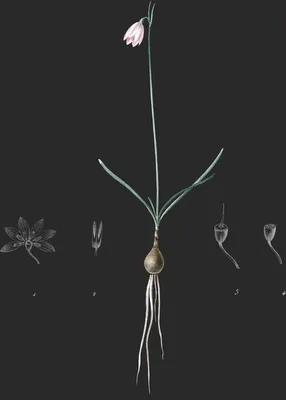
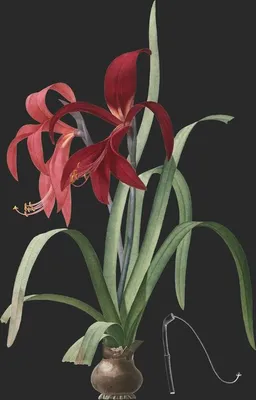
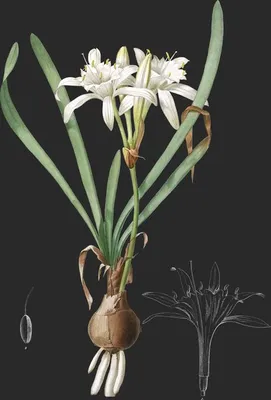
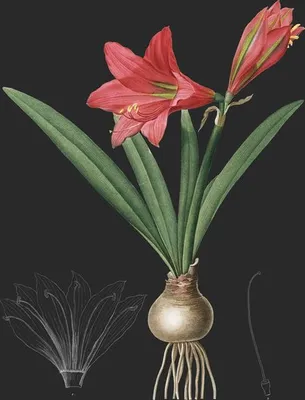
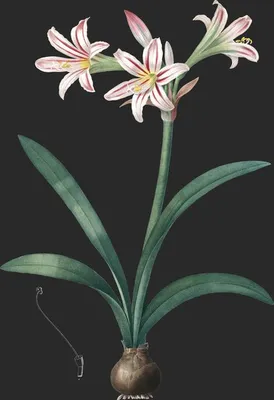
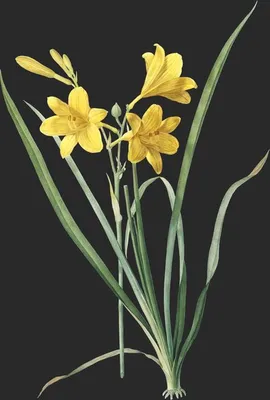
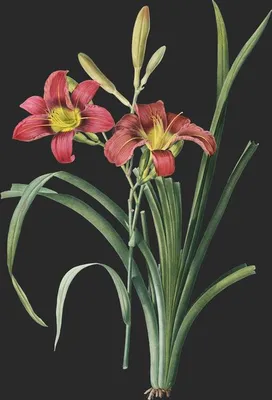
Leucoium Autumnale
Nivéole d’Automne
Nivéole d’Automne
Ten ways of seeing
- measured cast amber
- upright 5.98 : 1
First Look
真山水之川谷,远望之以取其势,近看之以取其质。
—— 宋·郭熙《林泉高致·山水训》
Mountains and valleys: from afar take their momentum, up close take their texture — the two distances from which any picture is read.
The sheet is vertical: the eye climbs and settles in the upper half. Let the plant stand before you look for detail. Then step in close: watch where colour meets line, and whether the line ever breaks. Third, find where the orange is deepest: the whole tonal order is measured from that patch.
Name and Thing
The binomial is Leucoium autumnale: the first word is the genus it belongs among, the second the epithet that sets it apart. Two words carry a whole provenance. The older system filed it under Amaryllidaceæ by overall affinity; Linnaeus, counting stamens only, placed it in Hexandria — two ways of asking what a plant is. No established Chinese name exists, so it is cited by its binomial alone.
Form and Colour
Measured on this plate: flower colour covers 1.4% of the sheet, foliage 0.1%, the cast amber. No other plate shares exactly this measure. Bulbous plants store the year underground — bulb, corm or tuber — then send up a few thick leaves and a single scape, with six tepals in cup, funnel or star. Filed under orange — an amber orange, built in washes from a pale ground. Read the outline, then the colour layers, then the brush.
Composition
The sheet is tall. No details are appended: a plate for looking, not for keying out. The plant covers only 11% of the sheet, centred below centre; the emptiness is where the eye rests.
Line and Colour
The first half of the nineteenth century moved from copper to steel to lithography; stipple could render the softest transition. Craft leaves franker evidence than inscriptions. If you mean to copy it: take its skeleton, its margins and the order of its colours; the burin's hatching is the language of copper — suggest it with pencil density, do not imitate it stroke for stroke.
Poetic Resonance
不语亭亭俨薄妆,画裙双凤郁金香。
—— 唐·杜牧《偶呈鄭先輩》
The poem gives the mood first and the picture supplies the form; set the line beside the plate and the orange the corolla becomes its resting point.
Symbolism
The tulip was an imperial emblem in Istanbul and a speculative bubble in Amsterdam; the hyacinth sprang from a boy's blood in Greek myth. What bulbs share is concealment: next year kept underground. This plate leans orange, which in flower language adds one more degree of feeling. Meanings change their tune: the same flower can say opposite things within a century.
Season and Place
Early spring to early summer, genus by genus: tulips and hyacinths first, gladiolus and amaryllis later. South African bulbs filled European glasshouses after 1800. The year 1805 on the plate is that of publication, not of flowering — the gathering came a year or two earlier. See this kind of plate in the flowering season if you can: once you have met the living flower, you stop reading only colour.
The Book and the Hand
“The Liliaceae” carries only Pierre-Joseph Redouté's name. A plate is collective work: drawer, engraver and colourist were different hands, and the unnamed ones decided how good it looks.
What to Take Away
Next time you stand before a flowering plant, give it three minutes: leaf arrangement, direction of the flower, the darkest patch. The flower of that year is dust, yet its image on paper has outlived every living cousin.
About this plate
Observations
Cette plante, déjà décrite par plusieurs auteurs, ne mérite ici notre attention que relativement à ses rapports avec les espèces voisines. Le genre Leucoium se divise en deux groupes très-naturels; le premier, qui comprend les Leucoium vernum et autumnale, a pour caractère que le style se termine en forme de massue, et que les divisions de la fleur sont vertes, et très-sensiblement calleuses à l’ex-trémité. Le second de ces groupes a le style filiforme, pointu, et les sommités des divisions de sa fleur beaucoup moins calleuses. Il renferme le L. trichophyllam, que nous décrirons ci-après, et qui a pour caractère d’avoir la spathe à deux valves, et le L. autumnale, dont la spathe n’a qu’une seule valve. La Nivéole d’automne diffère encore de toutes les espèces congénères, et se rapproche du Galanthus nivalis, parce que les trois divisions intérieures de sa fleur se terminent par trois petites dents, dont celle du milieu est calleuse. Ce caractère avait déterminé Allioni à placer cette espèce dans le genre Galanthes; il devrait plutôt, dans notre opinion, engager les botanistes à réunir le Galanths aux Leucoium, dont il a le port, la végétation, la structure toute entière, excepté que les trois divisions intérieures de la fleur sont plus courtes qu’à l’ordinaire; et cette dillérence tient évidemment à l’un de ces avortements permanents si fréquents dans le règne végétal.
Fam. des Narcisses. Juss.—Hexandrie monogynie. Lin.
- Leucoium autumnale. L. spathâ monophylla biflora, petalis ovatis apice tridentatis, stylo filiformi. Schousb. Maroc. p. 139. Pers. Ench. 1. p. 349. Flor. franç. 3. ed. n. 1986.
- Leucoium autumnale. L. spathâ multiflorâ, stylo filiformi. Lin. Spec. 414. Lofl. it. 136. Kniph. cent. n. 39. Desf. atl. 1. p. 280. Poir. voy. 2. p. 1 44. Dict. enc. 4. p. 495 et 5. p. 177. Willd. Spec. 2. p. 30.
- Leucoium bulbosum autumnale tenuifolium. Clus. hist. 170. ic. J. Bauh. hist. 2. p. 593. ic.
- Leucoium bulbosum autumnale. C. Bauh. pin. 56. Dalech. hist. 1527. ic. Dod. pempt, 230. ic. Ger. hist. 148. ic. Besl. hort. Eynst. aut. 3. p. 6. f. 1.
- Narcisso-Leucoium autumnale capillaceo folio. Tourn. inst. 387.
- Leuco-Narcisso-lirion minimum autumnale. Lob. ic. 124.
- Trichophyllum. Renealm. spec. 100. ic.
- Galanthus autumnalis. All. auct. p. 33.