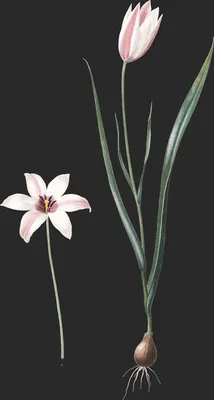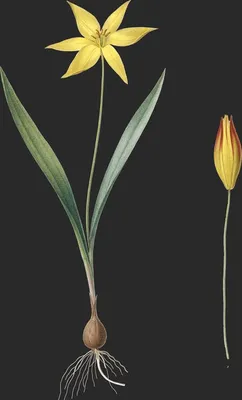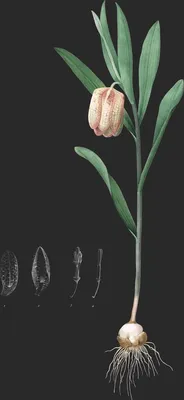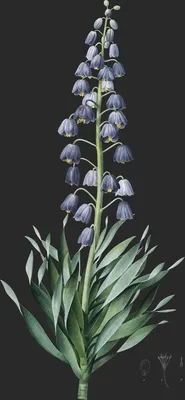
Lilium Candidum
百合属·Lilium Candidum
About this plate
Histoire
La patrie do Lis blane n’est pas bien exactement déterminée; il parait qu’il est originaire de l’Orient, d’où il aurait été, avec tant d’autres fleurs d’ornement, rapporté à l’époque des croisades. Linné dit qu’on le trouve à Cadix, mais sans citer son autorité; Maller l’a admis parmi les plantes indigènes de Suisse, parce que M. Chatelain l’a trouvé au mont Schlosberg, près de la Nenville: je l’ai moi-même trouvé, mais en petite quantité, dans des montagnes du Jura, au-dessus du Val de Travers, dans des lieux assez éloignés de toute habitation, mais ou il peut cependant s’être échappé des jardins.
Observations
Le Lis blanc est si connu, que j’ai eru inutile d’en donner une description; mais en étudiant avec soin la synonymie de cette plante, je crois m’être assuré que sous le nom de variété on y a réuni une espèce très-distinete dont je traiterai ci-après.
Notre variété B, qui serait mieux nommée monstruosité, présente une tige plate très-large, qui s’épanouit au sommet en un nombre immense de fleurs: de Bry en a compté 199 dans un pied qui a fleuri à Francfort-sur-Mein, et dont il donne une figure. Au reste, cet aplatissement de la tige est un accident qui se rencontre dans un grand nombre de plantes, telles que la chicorée, le jasioné, l’asperge, le jasminum fruticans, etc. Les physiologistes n’en ont point encore déterminé la cause.
Notre variété C est une autre monstruosité à fleur pleine très-grande, et presque semblable à celle des Magnoliers. Je la cite encore d’après de Bry et Gaspard Bauhin.
On en connait encore d’autres variétés & fleurs doubles, i fleurs rayées de rouge, et à feuilles panachées qui sont produites par la cultare, et qui n’offrent rien de remarquable.
Lilium peregrinum
Cette espèce parait avoir été apportée de Constantinople en Europe vers la fin du seixième siècle. Elle a été décrite et figurée par l’Ecluse, dont la figure a été copiée par Lobel et par de Bry. Comme cette plante a disparu de la plupart des jardins, Linné, ne l’ayant pas vue, l’a réunie comme variété au Lis blanc, dont elle diffère par ses fleurs pendantes, au lieu d’être dressées comme dans l’espèce commune. Miller, qui parait l’avoir cultivée, l’a rétablie comme espèce distinete, et a fait observer qu’outre la disposition de ses fleurs; elle diflère du Lis blane par sa tige plas courte, ses feuilles plus étroites et en plus petit nombre, ses fleurs un pen moins grosses, et ses pétales plus étroits à leur base. D’après ces caractères, il assure qu’elle est certainement distinete. Malgré ces autorités respectables, les botanistes subséquents ont continué à classer le Lis de Constantinople comme variété du Lis blanc: je ne crois pas cependant qu’à la seule inspection des figures citées on puisse garder des doutes sur la diversité de ces deux espèces, surtout si l’on réfléchit à l’asser tion positive de Miller.
Ce Lis, comme le précédent, est sujet, d’après l’Ecluse et Miller, à avoir une tige fortement comprimée et chargée d’un tres-grand nombre de fleurs.
Fam. des Liliacées. Juss.—Hexandrie monogynie. Lin.
- Liliam candidam. L. foliis lanceolatis sparsis basi attenuatis, floribus erectis campanulatis intùs glabris.
- Liliam candidum. L. foliis lanceolatis sparsis basi attenuatis, corollis campamulatis intas glabris. Willd. Spec. 2. p. 84.
- Liliam candidum. L. foliis sparsis, corollis campanulatis intas glabris. Lin. Spec. 433. Mill. Dict. n. 1. Gron. orient. 105. Hall. helv. n. 1231. Lam. Dict. 3. p. 534. illustr. t. 246. f. 1. Desf. Fl. atl. 1. p. 292. Murr. app. med. 5. p. 88. Gil. Elem. 1. p. 382. f. 234.
- Lilium album vulgare. J. Bauh. hist. 2. p. 685. ic. Tourn. inst. 369. t. 195 et 196. Vallet. hort. par. t. 20. ex Desf.
- Lilium album flore erceto et vulgare. C. Bauh. pin. 76. Moris. oxon. s. 4. t. 21. f. 13. Black. herb. t. 11. Dodart. icon.
- Lilium. Mathiol. comm. 600. ic. Cam. épit. 570. ic. Fuchs. hist. 364. ic.
- Liliam candidum. Dod. pempt. 197. ic. Lob. icon. 163. Best. hort. Eynst. vern. 5. p. 9. f. 1. Lob. adv. nov. p. 60.
- Lilium album. Trag. 793. ic. Tabern. Icon. 638. Dalech. hist. 1492. ic. Pauli. Dan. t. 271. Ger. hist. 190. ic. ex Desf.
- Lilium flore albo. Swert. Floril. t. 45.
- Le lis. Regnault. bot. ic.
- B. Caule fasciato multilloro.
- Lilium liliorum sive 122 lilia ex eodem bulbo enata. Bry. Flor. nov, ic.
- C. Flore pleno.
- Lilium mulafolium foruit in horto principissi stuckardiæ. Bry. Flor. nov. ic.
- Liliam album plenum. Ursin. progr. Lipsiæ. 1662. 4.° ex bibl. Banks.
- Liliam peregrimum. L. foliis sparsis, corollis campanulatis cernuis, petalis basi angustioribus. Mill. Dict. n. 2.
- Liliam album floribus dependentibus sive peregrinum. C. Bauh. pin. 76.
- Sultan Zambach, sive Martagon Constantinopolitanum albo flore. Clus. hist. 1. p. 135. ic.
- Martagon album Lilium candidam Bizantinum. Lob. icon. t. 153. f. 2.
- Sultan Sambach. De Bry. Flor. nov. t. 4.
- B. Caule fasciato multifloro.
- Liliam album byzantinum polyanthon. Clus. hist. loc. cit.
Twelve ways of seeing
- measured cast yellow-green
- upright 1.54 : 1
- published 1807
- Plate 199
Not a catalogue entry but a way of looking: how to stand, what to notice, how the line was cut, when it flowers, where it came from, who made it — and then the poems and the classics that taught China to see the same flower. Read the twelve in order and the plate opens.
-
First Look
真山水之川谷,远望之以取其势,近看之以取其质。
—— 宋·郭熙《林泉高致·山水训》
Mountains and valleys: from afar take their momentum, up close take their texture — the two distances from which any picture is read.
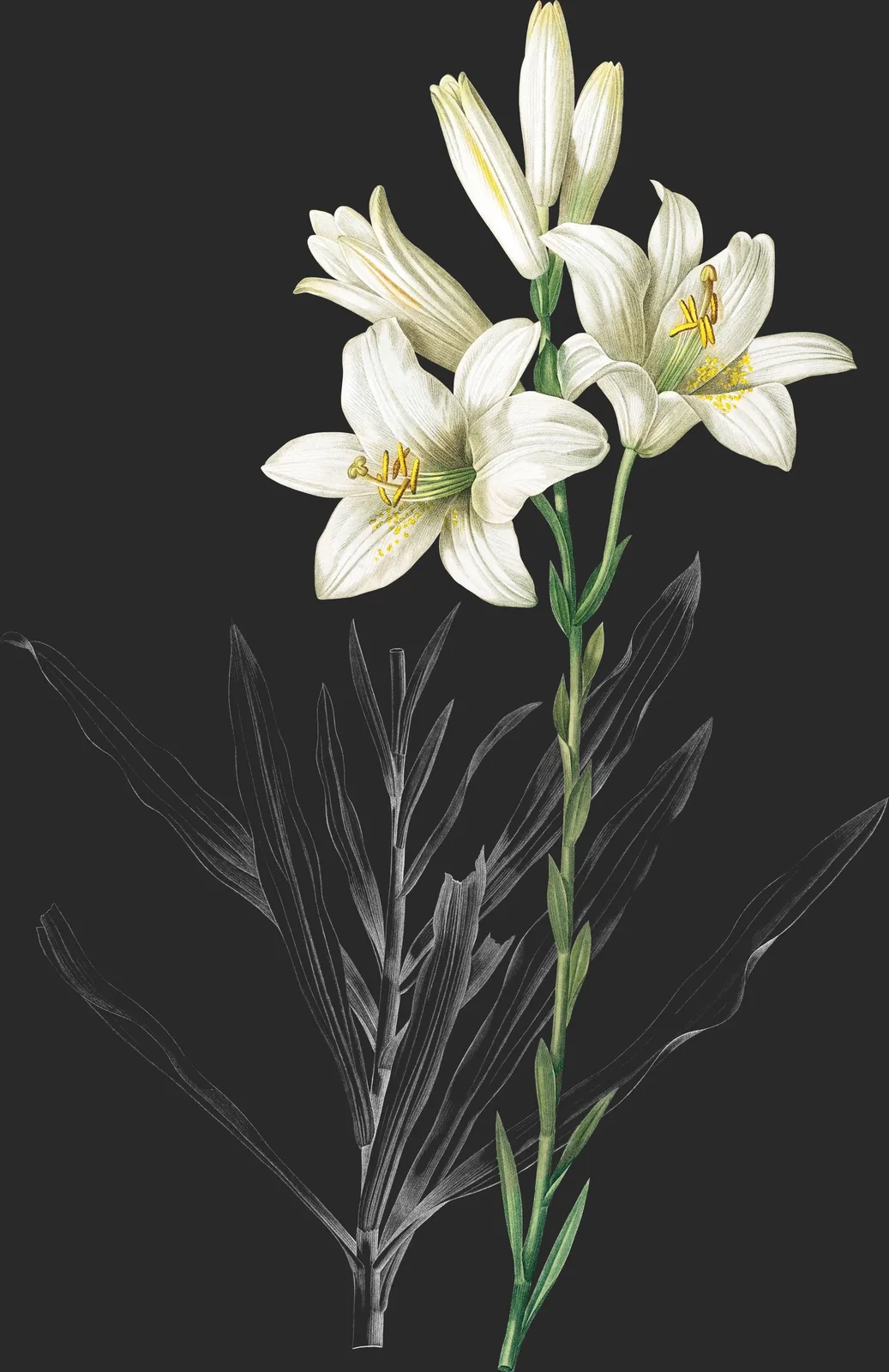
The sheet is vertical: the eye climbs and settles in the upper half. Let the plant stand before you look for detail. Then step in close: watch where colour meets line, and whether the line ever breaks. Third, find where the yellow is deepest: the whole tonal order is measured from that patch.
-
Name and Thing
The binomial is Lilium candidum: the first word is the genus it belongs among, the second the epithet that sets it apart. The genus name Lilium: Lilium comes from Greek leirion, the classical name for the white lily. The older system filed it under Liliaceæ by overall affinity; Linnaeus, counting stamens only, placed it in Hexandria — two ways of asking what a plant is. No established Chinese name exists, so it is cited by its binomial alone.
-
Form and Colour
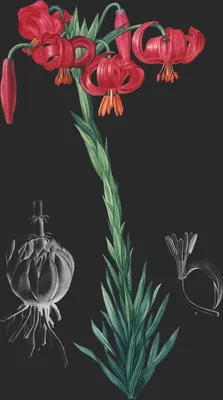
Measured on this plate: flower colour covers 2.2% of the sheet, foliage 2.1%, the cast yellow-green. No other plate shares exactly this measure. A bulb of overlapping fleshy scales gives the lily its Chinese name, 'hundred-fold'; six tepals reflex as the flower opens, around six stamens with long, T-shaped anthers. Filed under yellow — a honey-yellow, built in washes from a pale ground. Three things fix the habit: leaf arrangement, tepal count, and how the flower is borne.
-
Composition
Tall and narrow, the plant rising in one movement with generous margins — the upright format of most floras. (about 1.54 : 1) No details are appended: a plate for looking, not for keying out. The plant covers only 18% of the sheet, centred a little right of centre; the emptiness is where the eye rests. Blank paper is not unfinished work: it is where the eye rests.
-
Line and Colour
The first half of the nineteenth century moved from copper to steel to lithography; stipple could render the softest transition. Decide first whether it was printed or painted; only then discuss whether it is beautiful.
-
Season
Early to high summer, June and July; the flowers last only days, so artists drew them just as they opened. The year 1807 on the plate is that of publication, not of flowering — the gathering came a year or two earlier. Note the season. Phenology is the most practical tool of appreciation.
-
Provenance
Temperate north — China, Japan, Europe. Long used in Chinese medicine, lilies were hunted in East Asia by nineteenth-century collectors and transformed European gardens. The localities on the plate are those of a century ago; plants travel and places change their names.
-
The Book and the Hand
“The Liliaceae” was drawn by Pierre-Joseph Redouté and published 1802-1816. This plate is Plate 199, book page 199. The image is public domain; the hand-colouring is still one person's hand.
-
Poetic Resonance
梨花淡白柳深青,柳絮飞时花满城。
—— 宋·苏轼《东栏梨花》
Pear blossoms pale white, willows deep green; when the catkins fly, flowers fill the town.
The poem gives the mood first and the picture supplies the form; set the line beside the plate and the yellow the corolla becomes its resting point.
-
The Written Tradition
百合之根,以众瓣合成也。
—— 明·李时珍《本草纲目·菜部》
The root of the lily is many scales gathered into one — hence the name bai he, “a hundred joined”.
The Bencao Gangmu describes the bulb as garlic-like, edible and medicinal; Song writers already noted that the leaves vary while the flowers stay white. Keep the line; it will surface the next time you meet the same plant.
-
Symbolism
In the West the white lily is Marian purity, held by the angel of the Annunciation; in China the name sounds like 'a hundred years in harmony', a wedding wish. This plate leans yellow, which in flower language adds one more degree of feeling. In a flora it is a species first and a symbol second; the order is worth keeping.
-
What to Take Away
Appreciation is not knowledge but habit — one more look each time. A flora exists to be consulted; look long enough and you forget to consult — someone in 1807 gave a whole day to a single flower.