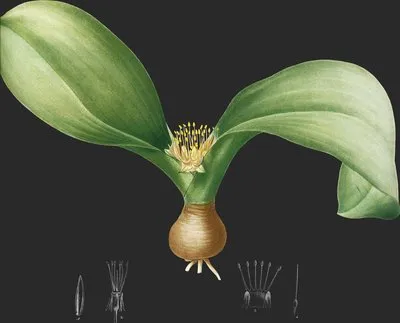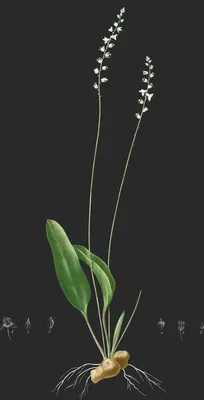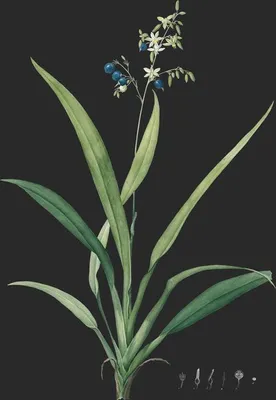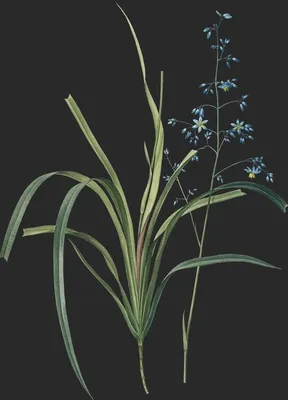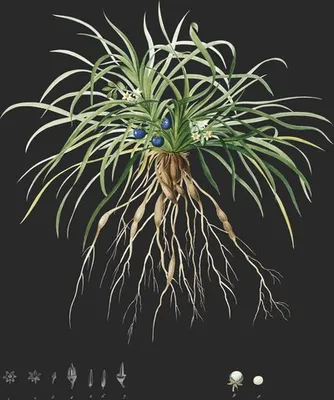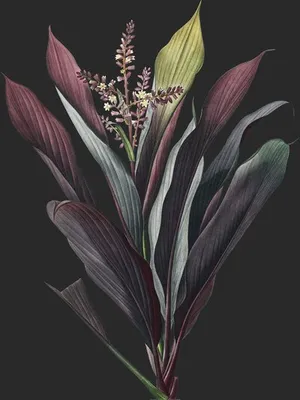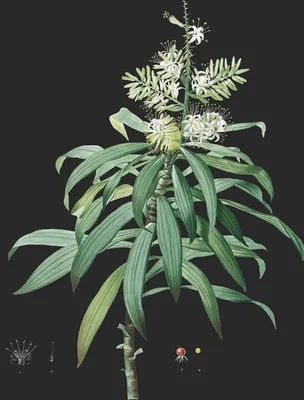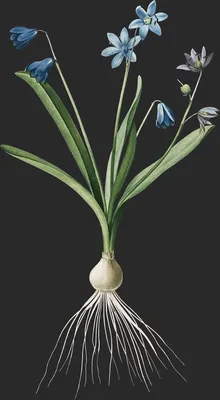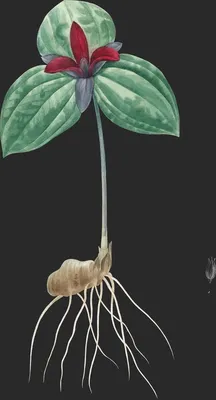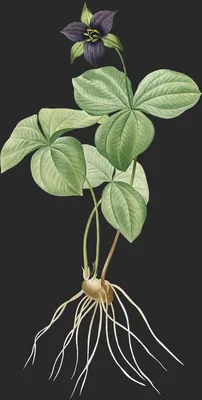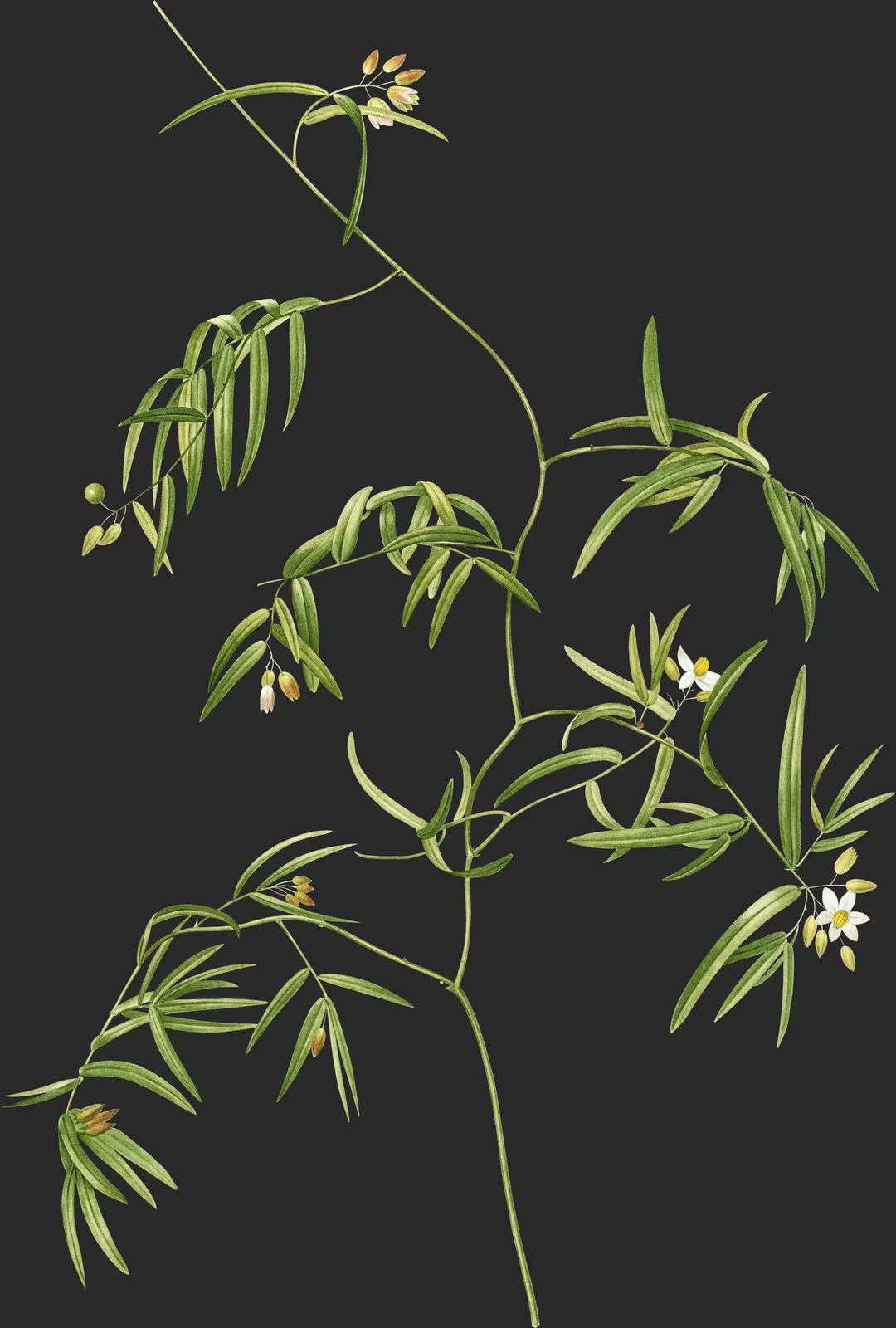
Medeola Angustifolia
Médeola a Feuilles Étroites
Médeola a Feuilles Étroites
Ten ways of seeing
- measured cast yellow-green
- upright 1.48 : 1
First Look
论画以形似,见与儿童邻。
—— 宋·苏轼《书鄢陵王主簿所画折枝》
To judge painting by likeness alone is the view of a child.
The sheet is vertical: the eye climbs and settles in the upper half. Let the plant stand before you look for detail. Then step in close: watch where colour meets line, and whether the line ever breaks. Third, find where the green is deepest: the whole tonal order is measured from that patch.
Name and Thing
The binomial is Medeola angustifolia: the first word is the genus it belongs among, the second the epithet that sets it apart. Here the epithet angustifolia means “narrow-leaved” — the name records the feature the namer noticed first. The older system filed it under Asparagaceæ by overall affinity; Linnaeus, counting stamens only, placed it in Hexandria — two ways of asking what a plant is. No established Chinese name exists, so it is cited by its binomial alone.
Form and Colour
Measured on this plate: flower colour covers 1.5% of the sheet, foliage 9.2%, the cast yellow-green. No other plate shares exactly this measure. A bulb of overlapping fleshy scales gives the lily its Chinese name, 'hundred-fold'; six tepals reflex as the flower opens, around six stamens with long, T-shaped anthers. a moss green. A single plant, laid out with nothing hidden.
Composition
The sheet is tall. No details are appended: a plate for looking, not for keying out. The plant covers only 11% of the sheet, centred near the centre; the emptiness is where the eye rests.
Line and Colour
The first half of the nineteenth century moved from copper to steel to lithography; stipple could render the softest transition. Take a loupe to three places: petal edge, leaf vein, caption. An unbroken line means engraving; colour crossing the outline means a hand. If you mean to copy it: take its skeleton, its margins and the order of its colours; the burin's hatching is the language of copper — suggest it with pencil density, do not imitate it stroke for stroke.
Poetic Resonance
梨花淡白柳深青,柳絮飞时花满城。
—— 宋·苏轼《东栏梨花》
Pear blossoms pale white, willows deep green; when the catkins fly, flowers fill the town.
The poem gives the mood first and the picture supplies the form; set the line beside the plate and the green the corolla becomes its resting point.
Symbolism
In the West the white lily is Marian purity, held by the angel of the Annunciation; in China the name sounds like 'a hundred years in harmony', a wedding wish. In a flora it is a species first and a symbol second; the order is worth keeping.
Season and Place
the flowers last only days, so artists drew them just as they opened. Temperate north — China, Japan, Europe. Long used in Chinese medicine, lilies were hunted in East Asia by nineteenth-century collectors and transformed European gardens. The year 1812 on the plate is that of publication, not of flowering — the gathering came a year or two earlier. See this kind of plate in the flowering season if you can: once you have met the living flower, you stop reading only colour.
The Book and the Hand
“The Liliaceae” carries only Pierre-Joseph Redouté's name. The image is public domain; the hand-colouring is still one person's hand.
What to Take Away
Carry three rules away: whole before detail; line before colour; picture before book. Two centuries on, the plant may still flower in some garden; the one on this sheet stopped in the season of 1812.
About this plate
Description
La tige de cette plante est grimpante, rameuse, grêle, longue de deux mètres environ, très-visqueuse, creusée de sillons, dont les bords forment des côtes saillantes, dentelées. Les rameaux s’écartent à angle droit; ils ont à leur base une feuille, et en outre une petite stipule lancéolée, membraneuse.
Les feuilles sont éparses, lancéolées-linéaires, rétrécies à leurs deux extré-mités, glabres, entières, un peu arrondies au sommet, avec une très-petite pointe, presque sessiles, mais nullement embrassantes, longues de trois à huit centi-mètres, marquées de nervures longitudinales, nombreuses, dont la moyenne est la plus grosse, contournées à leur base de telle manière, que l’un de leurs bords regarde le bas de la tige, et l’autre le haut.
Les fleurs forment de petits bouquets ou panicules à l’extrémité des rameaux. Leurs pédicelles sont rameux et visqueux, articulés immédiatement au-dessous de la fleur. A leur base sont de très-petites bractées linéaires.
Le périgone est partagé, jusqu’à sa base, en six segments étalés, ovales-lancéolés, un peu concaves, long» de huit ou dis millimètres. Les trois extérieurs sont verdâtres, un peu obtus, bruns au sommet. Les trois intérieurs sont plus obtus, blanes, un peu transparents, avec de grosses nervures opâques.
Les étamines sont un peu plus courtes que le périgone, à la base duquel elles sont insérées. Leurs filaments sont blanes, en forme de soies. Iis supportent des anthères oblougues-linéaires, plus longues qu’eux, dressées, d’un jaune citrin, à deux loges qui s’ouvrent latéralement.
L’ovaire est libre, arrondi, un peu triangulaire, d’un vert pale, surmonté par un style filiforme, blane, égal en longueur aux étamines. Le stigmate est peu distinet. Le fruit est une baie rouge, de la grosseur d’un pois.
Histoire
La Médeole à feuilles étroites est originaire du cap de Bonne-Espérance. On la cultive dans l’orangerie du jardin de la Malmaison, où elle fleurit pendant tout l’été.
Observations
C’est avec quelque doute que nous appliquons à notre plante le nom sous lequel nous la désignons. Il n’existe à notre connaissance aucune description, ni aucune bonne figure de la Medeola angustifolia d’Aiton, de manière que nous n’avons pu nous assurer de son identité avec la plante que nous venons de décrire. Cette dernière manque de l’un des principaux caractères assignés au genre Medeola, celui d’avoir trois styles; et il faudrait la regarder comme une véritable Asperge, si elle ne s’écartait pas des autres espèces de ce genre par son port et la grandeur de ses feuilles. Il est probable qu’il faudra un jour en faire un genre particulier, auquel on pourra rapporter probablement la Medeola asparogoïdes.
Fam. des Asperges. Juss.—Hexandrie monogynie. Lin.
- Medeola angustifolia. M. foliis alternis ovato-lanceolatis. Ait. Kew. p. 490. Willd. sp. pl. 2. p. 271. Pers. enchir. 1. p. 398.
- Medeola angustifolia. Mill. dict. n. 2.
- Asparagus Africanus scandens myrtifolio angustione. Till. fl. Pis. 17. t. 12. f. 2.
- Asparagus volubilis. A. caule volubili, foliis lanceolatis. Thunb. prodr. 66?
- Dracæna volubilis. D. herbacea volubilis foliis lanceolatis. Lin. suppl. 204.