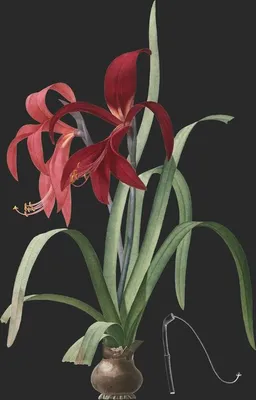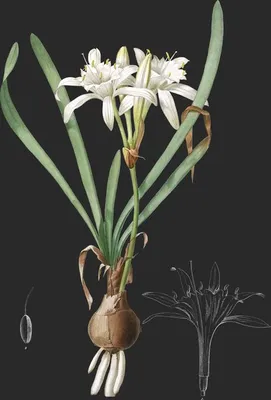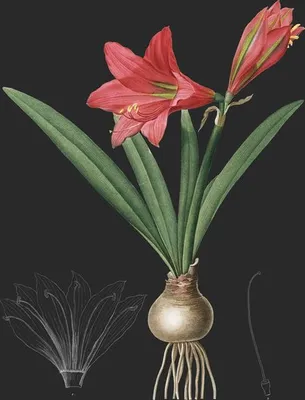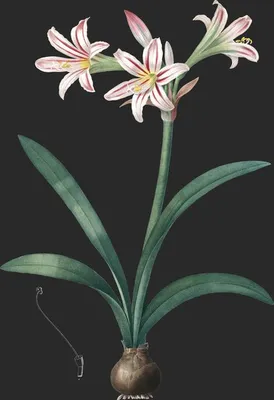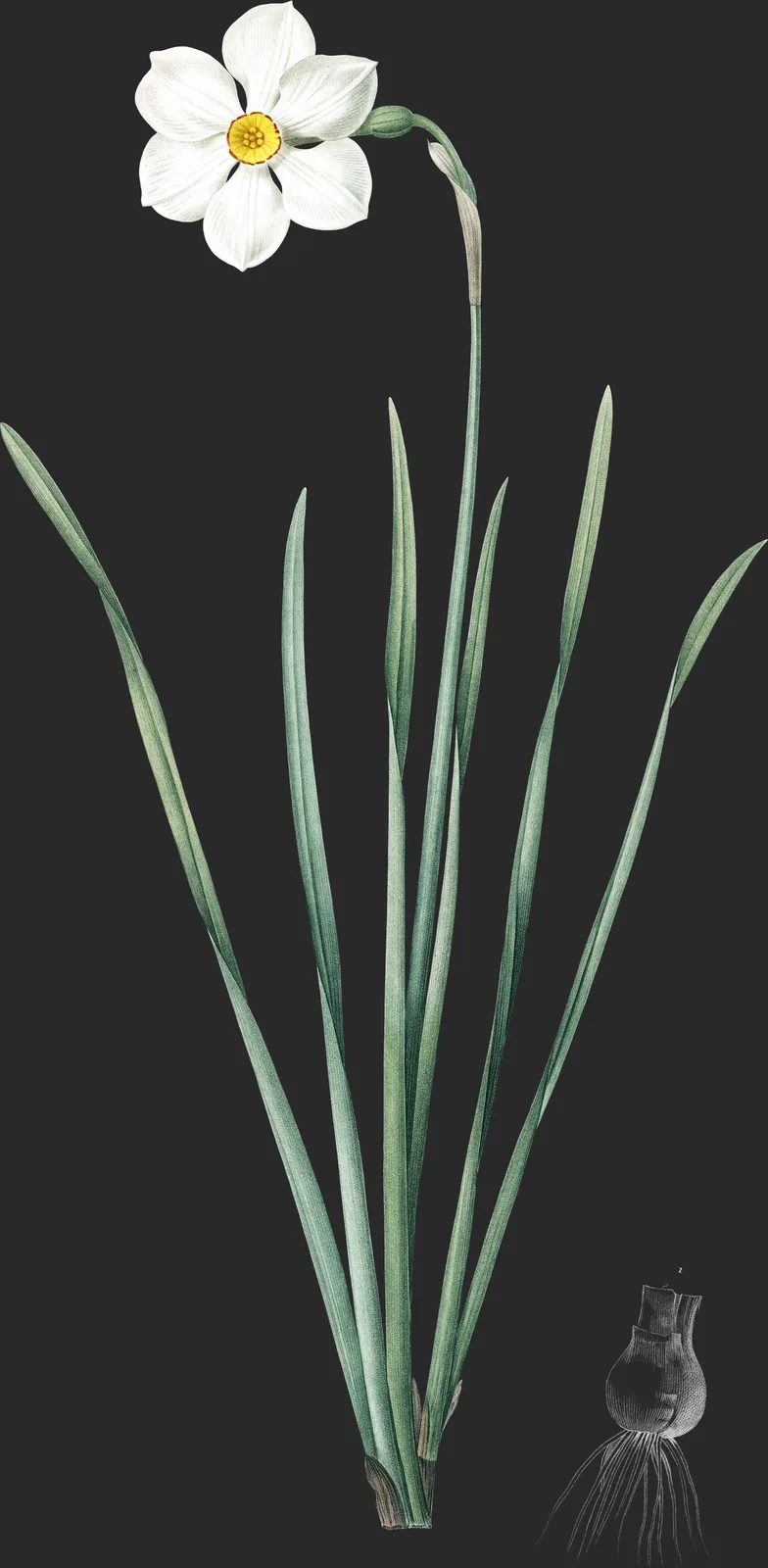
Narcissus Poeticus
Narcisse des Poètes
Narcisse des Poètes
Ten ways of seeing
- measured cast yellow-green
- upright 2.04 : 1
First Look
竖划三寸,当千仞之高;横墨数尺,体百里之迥。
—— 南朝宋·宗炳《画山水序》
A vertical stroke of three inches stands for a cliff of a thousand fathoms; a few feet of ink holds a hundred li.
The sheet is vertical: the eye climbs and settles in the upper half. Let the plant stand before you look for detail. Then step in close: watch where colour meets line, and whether the line ever breaks. Third, find where the green is deepest: the whole tonal order is measured from that patch. The pose leans left: the upper half carries 12 points further left than the lower — a living thing, not a diagram.
Name and Thing
The binomial is Narcissus poeticus: the first word is the genus it belongs among, the second the epithet that sets it apart. The genus name Narcissus: Narcissus is the youth of Greek myth who fell in love with his own reflection. The older system filed it under Amaryllidaceæ by overall affinity; Linnaeus, counting stamens only, placed it in Hexandria — two ways of asking what a plant is. No established Chinese name exists, so it is cited by its binomial alone.
Form and Colour
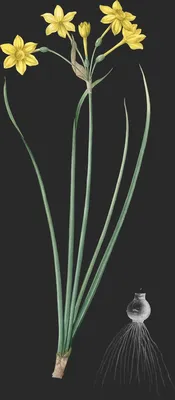
Measured on this plate: flower colour is sparing, 0.2% of the sheet against 2.6% of foliage, the cast tending yellow-green — as with pale or white blooms, outline and tone do the talking. A layered bulb, upright strap leaves, six white tepals and a small golden cup — the Chinese name is 'silver terrace with a golden cup'. a moss green. A single plant, laid out with nothing hidden.
Composition
The sheet is tall. No details are appended: a plate for looking, not for keying out. The plant covers only 15% of the sheet, centred near the centre; the emptiness is where the eye rests.
Line and Colour
The first half of the nineteenth century moved from copper to steel to lithography; stipple could render the softest transition. There is evidence on the back too: the plate mark pressed into the paper, the slight relief of the pigment, lines worn shallow in a later printing. If you mean to copy it: take its skeleton, its margins and the order of its colours; the burin's hatching is the language of copper — suggest it with pencil density, do not imitate it stroke for stroke.
Poetic Resonance
斩根削皮如紫玉,江妃水仙惜不得。
—— 唐·杜甫《桃竹杖引赠章留后》
The poem gives the mood first and the picture supplies the form; set the line beside the plate and the green the corolla becomes its resting point.
Symbolism
In China it is the New Year's offering — clear, fragrant, a little otherworldly; in Europe, because of Narcissus, it means self-love and the gaze turned inward. Flower language was added later; the flower knows nothing of it, and that innocence is part of its power.
Season and Place
Late winter into early spring: forced in water in the twelfth month, blooming at the New Year. Zhangzhou in Fujian has grown it since Ming times. The year 1805 on the plate is that of publication, not of flowering — the gathering came a year or two earlier. See this kind of plate in the flowering season if you can: once you have met the living flower, you stop reading only colour.
The Book and the Hand
“The Liliaceae” carries only Pierre-Joseph Redouté's name. From drawing to plate the sheet passed through several hands — the engraver aimed at accuracy, the colourist at speed, and between them lies each plate's unevenness.
What to Take Away
If you keep one line, keep Guo Xi's: from afar its momentum, up close its texture. The flower of that year is dust, yet its image on paper has outlived every living cousin.
About this plate
Description
Une balbe arrondie donne naissance à plusieurs feuilles droites, lisses, glabres, obtuses, presque aussi longues que la hampe, et dont la largeur est de 6–8 millimètres dans la var. β, et d’environ 15–18 dans la var. α, que quelques botanistes considèrent comme une espèce distincte.
La hampe est droite, longue de 3–4 décimètres, un pen comprimée, terminée par une seule fleur penchée, et qui sort d’une spathe scarieuse fendue latéralement et d’une seule pièce: cette Ileur est remarquable par son odeur agréable, par sa belle couleur blanche, et par son godet très-court, d’un jaune citron, crénelé et bordé d’un liseré rouge. On trouve des individas où le bord du godet est d’un rouge ponceau; d’autres où il est de couleur orangée et presque jaune.
Histoire
Le Narcisse des postes eroit naturellement dans les prairies de la partie tem pérée de l’Europe. Il fleurit au mois de mai, et à cette époque, on le recueille pour le placer comme ornement dans les maisons. C’est dans le même but que les fleuristes le cultivent: ils en ont obtenn une belle variété double, dans laquelle le godet a disparu, et dont la fleur parait composée d’un grand nombre de pétales d’un blane de lait. Dans une autre varidé, on trouve encore an centre de la fleur quelques traces du godet coloré. Cette plante est peu délicate et se contente d’une terre commune: on peut y laisser ses oignons pendant plusieurs années, et ils s’y multiplient par leurs cayeux. C’est aussi par ces cayeux que les jardiniers propagent cette plante, car il est rare qu’elle porte des graines fertiles.
Camerarius rapporte que la racine de ce Narcisse cuite est vomitive. Elle est actuellement hors d’usage.
Le Narcisse des poètes a été ainsi nommé, parce qu’on a pensé que c’était à cette plante que les anciens poètes ont fait allusion dans la fable de Narcisse: il porte les noms vulgaires de Campanette, Pante-coste, Genette, Jannette; ce dernier nom lui est donné par les Francs-Comtois, d’oi on a tiré celui de Jannette des Comtois, d’où par corruption est venu celui de Jannette des Comptoirs.
Fam. des Narcisses. Juss.—Hexandrie monogynie. Lin.
- Narcissas poeticus. N. spathâ uniflorâ, coronâ rotatâ brevissimâ scariosâ eremalatâ. Syn. Fl. gall. p. 165. FI. fr. n. 1979.
- Narcissus poeticas. N. spathâ uniflorâ, nectario rotato brevissimo scarioso crenulato. Lin. Spec. 414. hort. Ups. 74. Scop. carn. n. 394. Mill. Dict. n. 2. Roth. germ. I. 143. II. 379. Hoffm. germ. 115. Bull. herb. t. 306. Lan. Fl. fr. n. 966. II. Dict. 4. p. 422. Vill. Dauph. 2. p. 248. Ger. prov. 146. Leers. herb. 242. Gou. hort. monsp. 163. Flor. monsp. 304. Willd. Spec. 2. p. 34. Pers. ench. 349.
- Narcissus poeticus. N. perapetalo radiato corollâ breviori flavo margine coccineo lacero, spathâ uniflorâ. Mœnch. meth. 507.
- Narcissus uniflorus, foliis ensiformibus, seypho brevissimo. Hall. helv. n. 1250.
- Narcissus foliis ensiformibus, floris nectario rotato brevissimo. Lin. hort. Cliff. 134. Roy. Lugd-b. 35. Sauv. monsp. 17.
- Narcissas albus circulo purpureo. C. Bauh. pint. 48. Tourn. inst. 353.
- Narcissus medio purpureus. Dod. pempt. 223. Cam. epit. 951. J. Bauh. 2. p. 600.
A. latifolius.
- Narcissus poeticus. N. uniflorus, nectario rotato membranaceo crenato, petalis foliisque amplissimis. Haw. trans. Lin. soc. 5. p. 244. engl. bot. t. 275. non. Curt. nec. Huds.
- Narcissus poeticus. N. spathâ uniflorâ, nectario rotato brevissimo membranaceo crenato, foliis obtusè carinatis margine rellexis. Smith. Fl. brit. 353.
- Narcissus patellaris. Salisb. prod. 225. ex. Sm.
- Narcissus majalis. Cart. bot. mog. t. 193.
B. Angustifolius.
- Narcissus angustifolius. N. uniflorus nectario brevissimo crenulato, petalis foliisque gracilibus. Haw. trans. Lin. soc. 5. p. 245.
- Narcissus angustifolias. Curt. mag. t. 193.