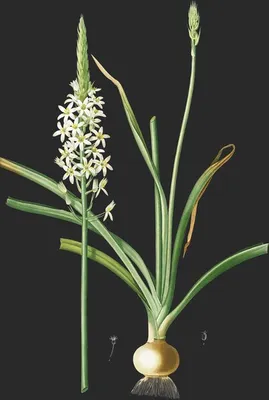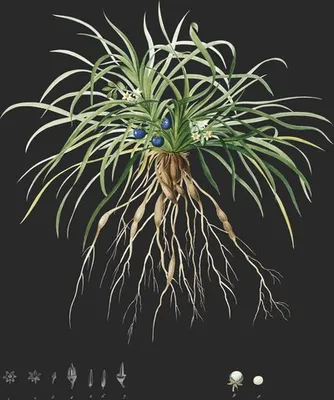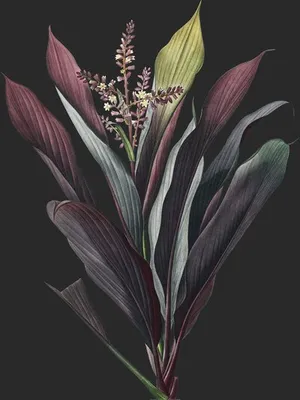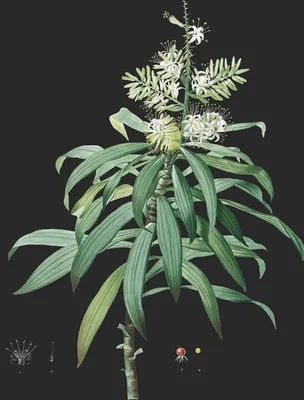
Ornithogalum Lacteum
还阳参亚族
Ornithogale Blanc de Lait
About this plate
Description
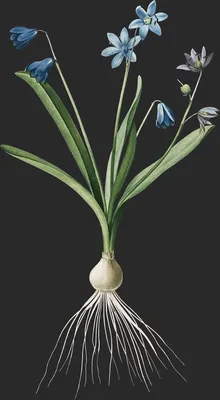
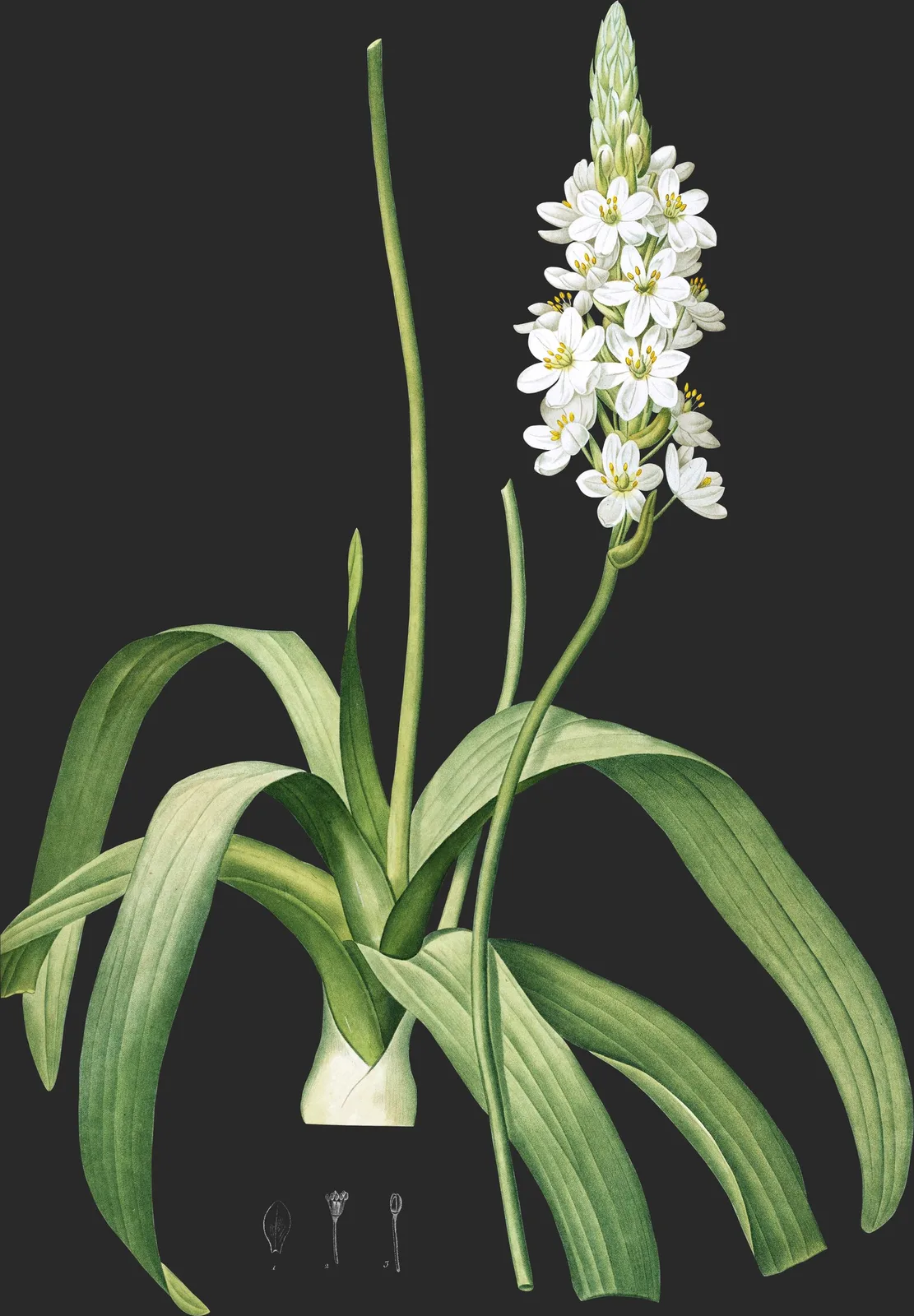
Cet Ornithogale, qui ressemble beaucoup à l’Ornithogale en thyrse, mais qui en diffère par sa grappe plus allongée, par ses dimensions plus grandes et par ses filaments simples et presque filiformes, sort d’une bulbe ovale, grosse comme un petit ceuf, converte de tuniques blanches ou d’un jaune pâle.
Les feuilles, toutes radicales et assez nombreuses, sont linéaires-lancéolées, aiguës, un peu roides et charnues, mais cependant plas ou moins couchées, glabres, hérissées sur les bords de cils très-courts, fins et serrés, un peu pliées en gonttière, longues de deux ou trois décimètres, larges de trois ou quatre centimètres.
La hampe est hante de six à neuf décimètres, glabre, cylindrique, nue, dressée, flexueuse, un peu glauque.
Les fleurs forment une grappe tres-serrée, d’abord conique, mais s’allongeant ensuite et devenant presque cylindrique. Leurs pédicelles sont longs de deux à trois centimètres, verts, étalés. Les bractées sont lancéolées, membraneuses, aiguës, blanches avec le sommet jaune, aussi longues que les pédicelles, du moins dans les individos que nous avons vus.
Le périgone est divisé jusqu’à sa base en six lanières, d’abord très-étalées, mais se redressant ensuite un peu de manière à donner à la fleur la forme d’une cloche très-évasée. Ces lanières sont ovales, dilatées vers le haut, concaves, blanches, avec une petite tache verte à la base. Elles grandissent après la fécondation.
Les étamines sont de moitié plus courtes que le périgone. Leurs filaments sont blancs, filiformes. ’Trois d’entre eux sont légèrement dilatés à la base. Ils supportent des anthères oblongues, jaunes, vacillantes.
Lovaire est jaune, ovale, triangulaire, à trois sillons, rétréci en pointe au sommet. Le style est filiforme, blanc, plus long que les étamines, terminé par un stigmate un peu en forme de tête, à trois lobes.
Histoire
1.Ornithogale blanc de lait est originaire du cap de Bonne-Espérance. On l’a fort multiplié depuis quelques années dans les jardins de Paris, où on l’abrite dans la serre chaude pendant l’hiver. Il fleurit au mois de mai.
Explication de la planche
La Plante entière de grandeur naturelle.
- L’une des divisions da périgone.
- Une fleur dont le périgone a été enlevé.
- L’ovaire.
Fam. des Asphodèles. Juss.—Hexandrie monogynie. Lin.
- Ornithegalam lacteum. O. racemo longo, filamentis subulatis, alternis sub-lanceolatis, bracteis membranaceis ovatis peduncalo duplò brevioribus, foliis lanceolatis acutis margine ciliatis. Willd. sp. pl. 2. p. 117. Gawl. in Cart. bot. mag. 1134. Ait. hort. Kew. ed. alt. 2. p. 258.
- Ornithogalum lacteum. O. filamentis alternis ad basim leviter marginatis, racemo pyramidato denso longo, foliis lanceolatis planis ad apicem conniventibus ad oras villosis. Jacq. ic. rar. 2. t. 434. Collect. suppl. 76. Pers. enchir. 1. p. 364.
Twelve ways of seeing
- measured cast yellow-green
- upright 1.44 : 1
- published 1812
- Plate 418
Not a catalogue entry but a way of looking: how to stand, what to notice, how the line was cut, when it flowers, where it came from, who made it — and then the poems and the classics that taught China to see the same flower. Read the twelve in order and the plate opens.
-
First Look
夫象物必在于形似,形似须全其骨气。
—— 唐·张彦远《历代名画记》
Likeness is the threshold; bone-and-breath is the point.
The sheet is vertical: the eye climbs and settles in the upper half. Let the plant stand before you look for detail. Then step in close: watch where colour meets line, and whether the line ever breaks. Third, find where the green is deepest: the whole tonal order is measured from that patch. The pose leans right: the upper half carries 14 points further right than the lower — a living thing, not a diagram.
-
Name and Thing
The binomial is Ornithogalum lacteum: the first word is the genus it belongs among, the second the epithet that sets it apart. Two words carry a whole provenance. The older system filed it under Asparagaceæ by overall affinity; Linnaeus, counting stamens only, placed it in Hexandria — two ways of asking what a plant is. The Chinese name 还阳参亚族 is a modern rendering of the Latin, not an old garden name.
-
Form and Colour
Measured on this plate: flower colour is sparing, 1.1% of the sheet against 19.9% of foliage, the cast tending yellow-green — as with pale or white blooms, outline and tone do the talking. Bulbous plants store the year underground — bulb, corm or tuber — then send up a few thick leaves and a single scape, with six tepals in cup, funnel or star. Filed under green — a moss green, a colour that comes mostly from leaf and stem. Read the outline, then the colour layers, then the brush.
-
Composition
Tall and narrow, the plant rising in one movement with generous margins — the upright format of most floras. (about 1.44 : 1) No details are appended: a plate for looking, not for keying out. The plant covers only 27% of the sheet, centred below centre; the emptiness is where the eye rests. Old plates set the plant slightly off centre, with unequal margins — that small imbalance is what keeps it alive.
-
Line and Colour
The first half of the nineteenth century moved from copper to steel to lithography; stipple could render the softest transition. Decide first whether it was printed or painted; only then discuss whether it is beautiful.
-
Season
Early spring to early summer, genus by genus: tulips and hyacinths first, gladiolus and amaryllis later. The year 1812 on the plate is that of publication, not of flowering — the gathering came a year or two earlier. The plate records ten days of peak; the other three hundred are leaf, fruit and rest.
-
Provenance
Three homelands: the Mediterranean, Central Asia and South Africa. The tulip came from Ottoman gardens and became a Dutch mania; South African bulbs filled European glasshouses after 1800. In the same volume the kin are shelved together; set several plates side by side.
-
The Book and the Hand
“The Liliaceae” was drawn by Pierre-Joseph Redouté and published 1802-1816. This plate is Plate 418, book page 418. The image is public domain; the hand-colouring is still one person's hand.
-
Poetic Resonance
卢家少妇郁金堂,海燕双栖玳瑁梁。
—— 唐·沈佺期《古意呈補闕喬知之》
The poem gives the mood first and the picture supplies the form; set the line beside the plate and the green the corolla becomes its resting point.
-
The Written Tradition
天地与我并生,而万物与我为一。
—— 《庄子·齐物论》
Heaven and earth were born with me, and the ten thousand things are one with me.
Li Bai's 'orchid wine, fragrant with yujin' is often misread as tulips; the Tang yujin was a turmeric-like root used to scent wine — same name, different plant. The difference is not of quality but of question: Europe asks what it is, China asks whom it resembles.
-
Symbolism
The tulip was an imperial emblem in Istanbul and a speculative bubble in Amsterdam; the hyacinth sprang from a boy's blood in Greek myth. What bulbs share is concealment: next year kept underground. In a flora it is a species first and a symbol second; the order is worth keeping.
-
What to Take Away
If you keep one line, keep Guo Xi's: from afar its momentum, up close its texture. Two centuries on, the plant may still flower in some garden; the one on this sheet stopped in the season of 1812.