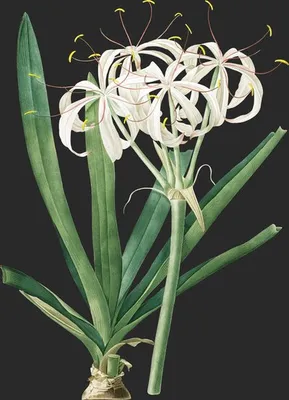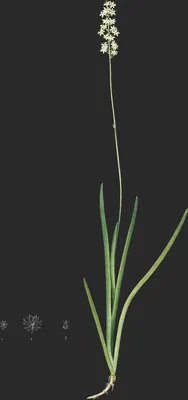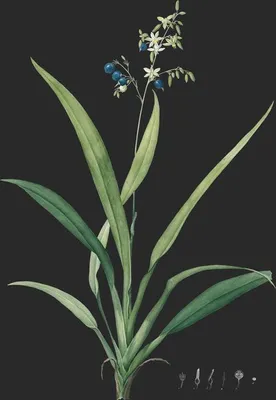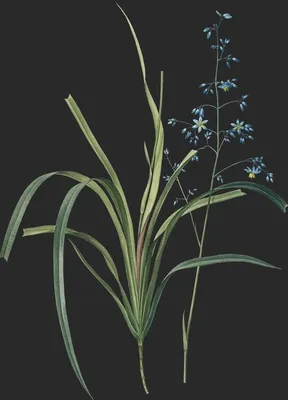
Sanseviera Carnea
虎尾兰属·Sanseviera Carnea
Sanseviera Rose
About this plate
Description
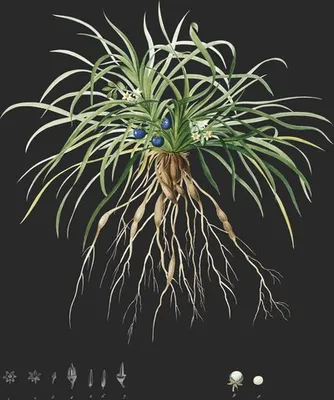
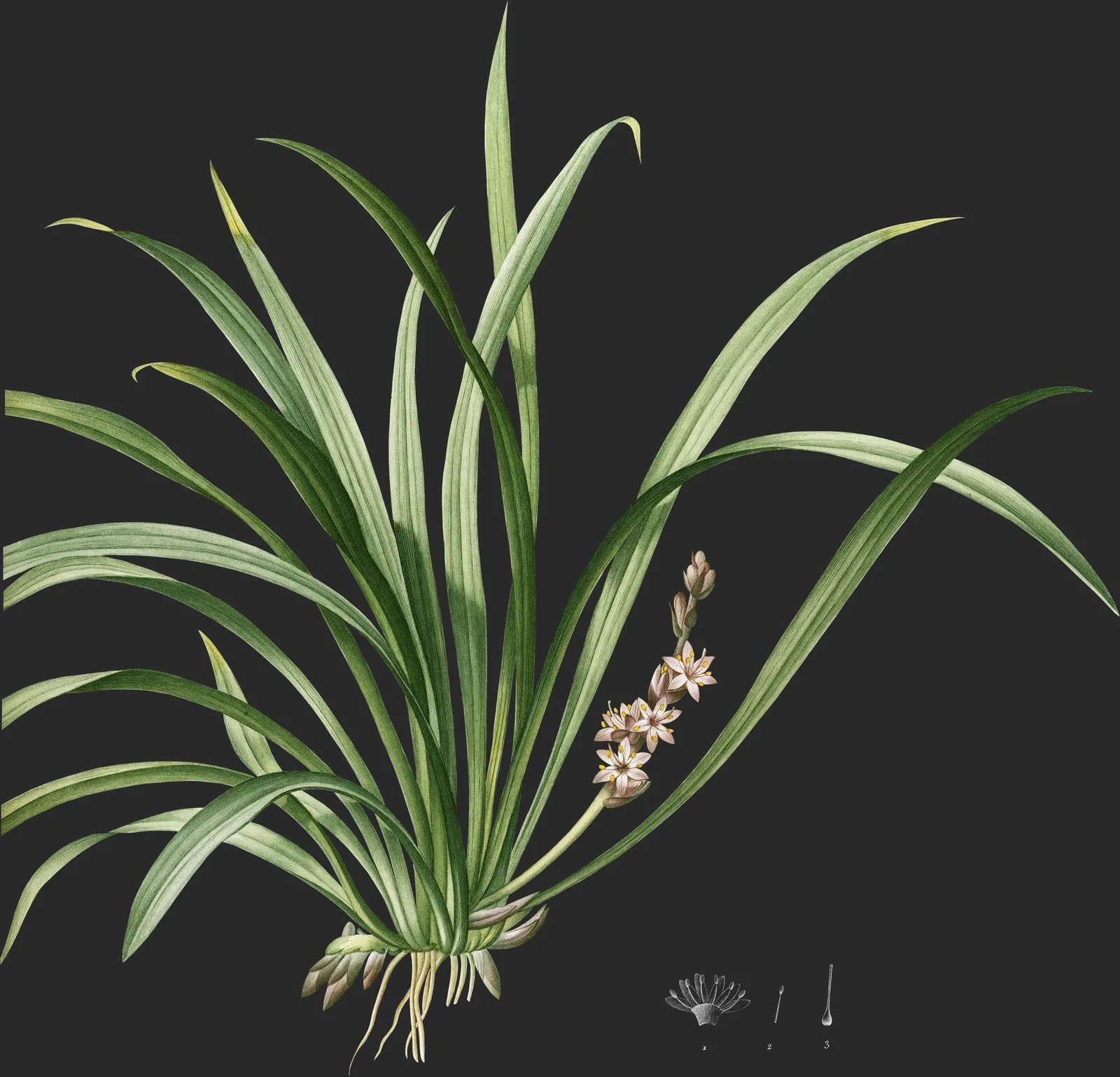
Une souche verte, de consistance demiligneuse, divisée en plusieurs rameaux couchés horizontalement sur la terre, et de la grosseur d’une plume de cygne, émet en dessous des fibres radicales nombreuses, d’un brun pâle.
Chacun des rameaux de cette souche est chargé d’un grand nombre de feuilles engainantes, qui le recouvrent dans sa presque totalité, et qui, quoiqu’elles soient toutes redressées, sont disposées sur deux rangées, laissant entre elles un intervalle étroit. Ces feuilles sont linéaires-lanceolées, hautes de deux à trois décimètres, rétrécies dans leur partie inférieure, qui est pliée en gouttière et carénée sur le dos, planes dans le reste de leur étendue, aigues, finement dentelées, glabres, d’un vert foncé uniforme, nullement charnues, de consistance médiocre, cartilagineuses sur les bords dans leur partie supérieure.
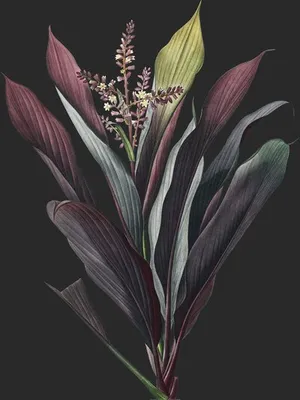
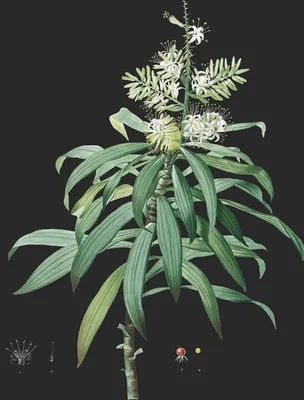
De l’extrémité des rameaux qui supportent ces feuilles, et au devant d’elles, nait une hampe nue, rougeâtre, presque cylindrique, glabre, haute d’un déci mètre environ, terminée par un épi lâche, que forment des fleurs roses peu nombreuses, sessiles, éparses, ou plus rarement réunies deux à deux. A la base de chaque fleur est une bractée lancéolée, aiguè, rougeâtre, aussi longue qu’elle.
Le périgone est inférieurement en forme de tabe, long de trois ou quatre millimètres seulement, et assex gros. Au dessus il est divisé en six segments lancéolés, aigus, demi-étalés, recourbés en dehors au sommet, longs d’un centi-mètre, d’un beau rose extérieurement, blanchâtres intérieurement.
Les filaments des étamines sont insérés à l’entrée du tabe du périgone, et atteignent presque la longueur du limbe. Ils sont blancs, en forme d’alène, surmontés par des anthères ovales jaunes.
L’ovaire est libre, trespetit, vert, arrondi. Le style est rouge, filiforme, triangulaire, plus long que les segments du périgone. Le stigmate est blanchâtre, barbu, arrondi, à trois lobes peu distinets.
Nous n’avons pas vu le fruit.
Histoire
La Sanséviera rose est originaire de la Chine, d’où elle a été introduite en Angleterre il y a une vingtaine d’années. C’est d’après des individus cultivés dans les serres du Jardin du Muséum d’Histoire naturelle que nous avons fait notre description et notre figure. Ils étaient en fleur au mois de décembre.
Explication de la planche
La Plante entière de grandeur naturelle.
- Une fleur fendue latéralement et isolée.
- Une étamine.
- L’ovaire et le style.
Fam. des Asperges. Juss.—Hexandrie monogynie. Lin.
- Sanseviera carnea, S. foliis lineari-lanceolatis trinerviis membranaceis equitantibus, bracteis tubum corolla aquantibus, floribus sessilibus. Willd. hort. Berol. 1. p. 376.
- Sanseviera carnea. S. foliis distichis lanceolatis ensiformibus carinatis, floribus solitariis sessilibus. Andr. bot. repos. 361.
Twelve ways of seeing
- measured cast yellow-green
- square 0.96 : 1
- published 1811
- Plate 323
Not a catalogue entry but a way of looking: how to stand, what to notice, how the line was cut, when it flowers, where it came from, who made it — and then the poems and the classics that taught China to see the same flower. Read the twelve in order and the plate opens.
-
First Look
竖划三寸,当千仞之高;横墨数尺,体百里之迥。
—— 南朝宋·宗炳《画山水序》
A vertical stroke of three inches stands for a cliff of a thousand fathoms; a few feet of ink holds a hundred li.
Nearly square, plant and detail each holding a corner. Then step in close: watch where colour meets line, and whether the line ever breaks. Third, find where the green is deepest: the whole tonal order is measured from that patch.
-
Name and Thing
The binomial is Sanseviera rose: the first word is the genus it belongs among, the second the epithet that sets it apart. Two words carry a whole provenance. The older system filed it under Asparagaceæ by overall affinity; Linnaeus, counting stamens only, placed it in Hexandria — two ways of asking what a plant is. No established Chinese name exists, so it is cited by its binomial alone.
-
Form and Colour
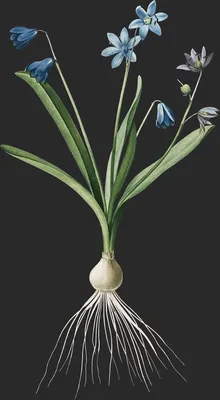
Measured on this plate: flower colour is sparing, 1.0% of the sheet against 12.5% of foliage, the cast tending yellow-green — as with pale or white blooms, outline and tone do the talking. A bulb of overlapping fleshy scales gives the lily its Chinese name, 'hundred-fold'; six tepals reflex as the flower opens, around six stamens with long, T-shaped anthers. Filed under green — a moss green, a colour that comes mostly from leaf and stem. Three things fix the habit: leaf arrangement, tepal count, and how the flower is borne.
-
Composition
Nearly square, plant and details sharing the corners. (about 0.96 : 1) No details are appended: a plate for looking, not for keying out. The plant covers only 18% of the sheet, centred a little left of centre; the emptiness is where the eye rests. Cover the margins with your thumb and the plate suffocates; uncover them and the flower breathes again.
-
Line and Colour
The first half of the nineteenth century moved from copper to steel to lithography; stipple could render the softest transition. There is evidence on the back too: the plate mark pressed into the paper, the slight relief of the pigment, lines worn shallow in a later printing.
-
Season
Early to high summer, June and July; the flowers last only days, so artists drew them just as they opened. The year 1811 on the plate is that of publication, not of flowering — the gathering came a year or two earlier. The plate records ten days of peak; the other three hundred are leaf, fruit and rest.
-
Provenance
Temperate north — China, Japan, Europe. Long used in Chinese medicine, lilies were hunted in East Asia by nineteenth-century collectors and transformed European gardens. The volume was made in 1802-1816, when most of this knowledge came from living plants under glass.
-
The Book and the Hand
“The Liliaceae” was drawn by Pierre-Joseph Redouté and published 1802-1816. This plate is Plate 323, book page 323. The image is public domain; the hand-colouring is still one person's hand.
-
Poetic Resonance
两丛香百合,一架粉长春。
—— 宋·陆游《北窗偶题四首 其一》
The poem gives the mood first and the picture supplies the form; set the line beside the plate and the green the corolla becomes its resting point.
-
The Written Tradition
百合之根,以众瓣合成也。
—— 明·李时珍《本草纲目·菜部》
The root of the lily is many scales gathered into one — hence the name bai he, “a hundred joined”.
The Bencao Gangmu describes the bulb as garlic-like, edible and medicinal; Song writers already noted that the leaves vary while the flowers stay white. You need not parse every word: take the line, and the flower acquires a second face.
-
Symbolism
In the West the white lily is Marian purity, held by the angel of the Annunciation; in China the name sounds like 'a hundred years in harmony', a wedding wish. Flower language was added later; the flower knows nothing of it, and that innocence is part of its power.
-
What to Take Away
Appreciation is not knowledge but habit — one more look each time. Two centuries on, the plant may still flower in some garden; the one on this sheet stopped in the season of 1811.