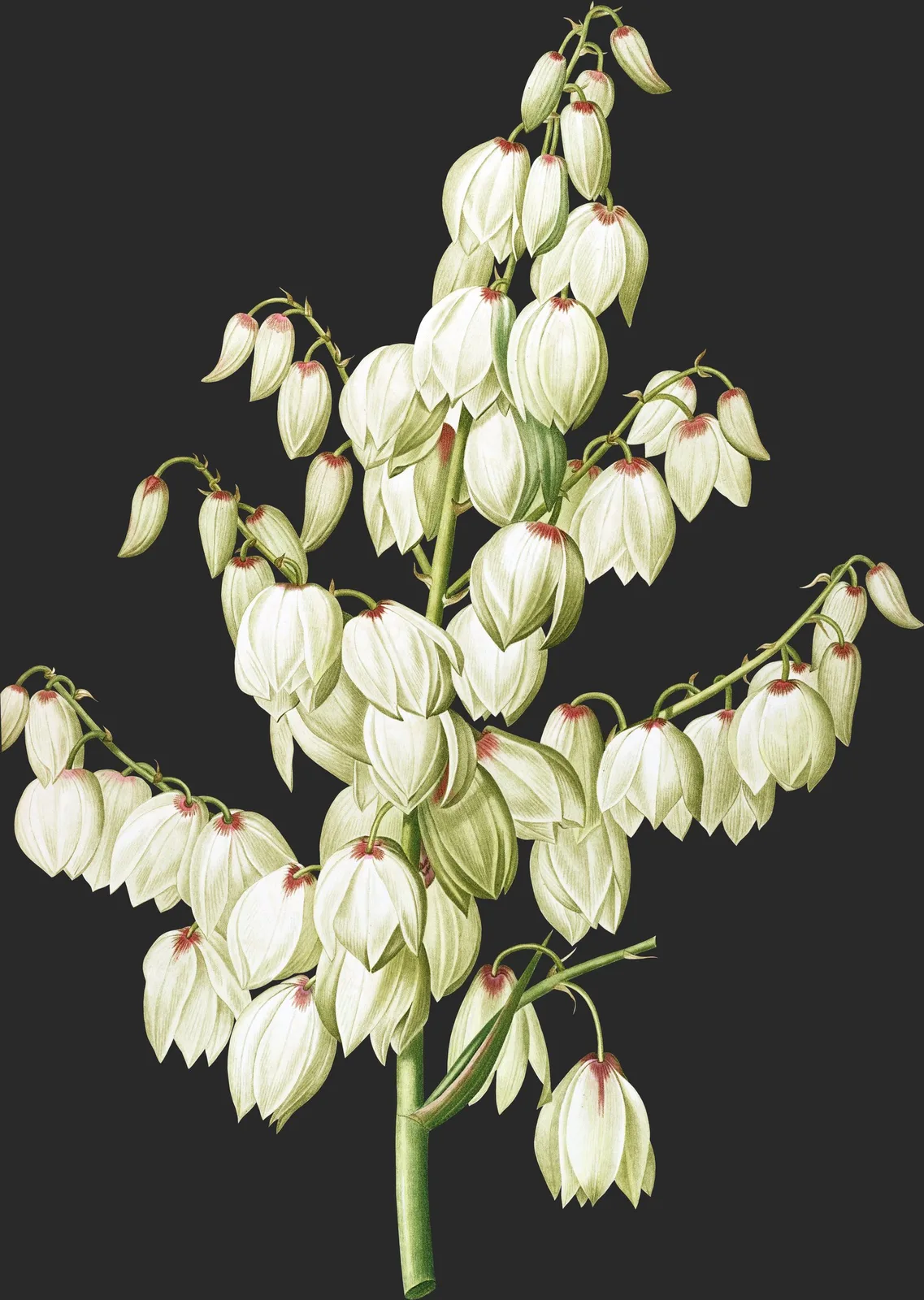
Yucca Aliofolia
Yucca a Feuilles d’Aloès
Yucca a Feuilles d’Aloès
About this plate
Description
La tige de cette belle plante est ligneuse, cylindrique, nue dans sa partie inférieure, dont l’écorce est brune, noirâtre, rugueuse, couverte dans sa partie supérieure par des écailles entuilées très-nombreuses, restes des feuilles qui sétaient précédemment développées dans ce lien, ou par les feuilles ellesmémes. Elle sélève quelquefois a trois ou quatre metres de hauteur, le plus souvent sans se diviser, mais quelquefois en se partageant en deux ou trois branches.
Les feuilles sont lineaires, lancéolées, rétrécies à leurs deux extrémités, terminées par une pointe épineuse, roides, cartilagineuses sur les bords, qui sont dentelés et rades, légèrement courbées en gouttière. Elles forment au sommet de la tige une touffe serrée, dans laquelle les supérieures sont dressées, les moyennes à peu près horizontales, et les inférieures un peu pendantes.
Do centre de ce faisceau de feuilles sort, à l’époque de la floraison, une hampe rameuse, longue de six décimètres au moins, glabre, grosse comme le pouce, couverte dans sa partie inférieure par quelques feuilles plus courtes que celles de la tige, mais d’ailleurs semblables. Les fleurs forment une grappe pyramidale, composée, trés-grande, qui occupe presque tonte la longueur de cette hampe. Les pédoncules communs qui les supportent sont anguleus et s’écartent de la hampe, à angle presque droit. Les inférieurs sont longs de deux décimètres environ et chargés de sept à huit llears; les supérieurs sont plus courts. Les pédicelles sont greles, longs de deux à quatre centimètres, arques et pendants à leur extrémité, ainsi que les fleurs. A la base des pédoncules communs sont des bractées lancéolées, aiguës, foliacées; les inférieures sont roides et vertes, les supérieures violettes et molles.
Le périgone est en forme de grelot, un peu plus petit que celui d’une talipe ordinaire, divisé jusqu’à sa base en six segments égaux, ovales, concaves, peu épais, un peu divergents, comprimés au sommet, d’abord entièrement blancs, à l’exception d’une tache violette à leur base, mais ensuite se teignant de cette dernière couleur le long de leur ligne moyenne.
Les étamines sont de moitié plus courtes que les divisions du périgone. Leurs filaments sont blanes, épais, oblongs, comprimes de dehors en dedans, légi rement pabescents, dressés et serrés les uns contre les autres dans la plus grande partie de leur étendue. Les anthères sont extrémement petites, couchées en travers sur le sommet du filament, à deux loges qui s’ouvrent en dessus.
Lovaire est prismatique, triangulaire, à angles obtus, creusés d’un sillon longitudinal. Sa longueur est égale à celle des étamines. Il n’y a point de style, proprement dit. Le stigmate est prismatique, épais, blane, triangulaire, divisé en trois lobes échancrés au sommet.
Histoire
L’Yucca à feuilles d’Aloës croit naturellement dans les Antilles, au Mexique, dans la Floride et la Caroline. On le cultive dans un grand nombre de jardins. Il demande à être abrité dans l’orangerie pendant l’hiver, du moins dans nos climats. Dans le midi de la France, il vient en pleine terre. Le même pied fleurit rarement deux années de suite; mais il n’y a rien de régulier dans les intervalles qui s’écoulent entre deux floraisons consécutives.
Fam. des Lis. Juss.—Hexandrie monogynie. Lin.
- Yucca aloifolia. Y. foliis crenulatis strictis. Lin. sp. pl. 457. Mill. dict. n. 2. Willd. sp. pl. 2. p. 184. Desfont. Traité des arbres, vol. 1. p. 18.
- Yucca follis crenulatis. Vir. Cliff. 29.
- Yucca foliorum margine crenalato. Hort. Cliff. 130. α.
- Yucca arborescens, folis rigidioribus rectis serratis. Dill. Elth. 435. t. 323. f. 416.
- Aloe Yuccæ folio canlescens ex Vera-Cruce. Plukn. alm. 19. t. 256. f. 4.
- Aloe Americana Yuccæ folio arborescens. Comm. prælud. 64. t. 14. Boerh. Lugd-b. 2. 131. n. 45.
Twelve ways of seeing
- measured cast yellow-green
- upright 1.41 : 1
- published 1812
- Plate 402
Not a catalogue entry but a way of looking: how to stand, what to notice, how the line was cut, when it flowers, where it came from, who made it — and then the poems and the classics that taught China to see the same flower. Read the twelve in order and the plate opens.
-
First Look
夫象物必在于形似,形似须全其骨气。
—— 唐·张彦远《历代名画记》
Likeness is the threshold; bone-and-breath is the point.
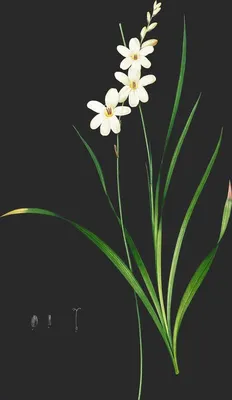
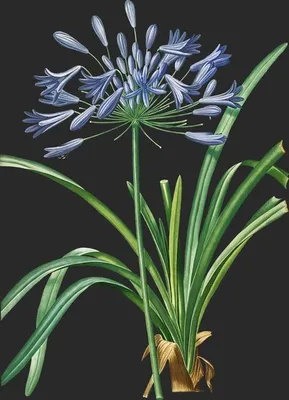
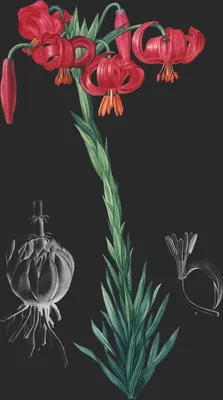
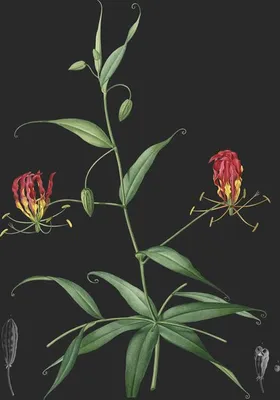
The sheet is vertical: the eye climbs and settles in the upper half. Let the plant stand before you look for detail. Then step in close: watch where colour meets line, and whether the line ever breaks. Third, find where the yellow is deepest: the whole tonal order is measured from that patch. The pose leans right: the upper half carries 8 points further right than the lower — a living thing, not a diagram.
-
Name and Thing
The binomial is Yucca aliofolia: the first word is the genus it belongs among, the second the epithet that sets it apart. Two words carry a whole provenance. The older system filed it under Liliaceæ by overall affinity; Linnaeus, counting stamens only, placed it in Hexandria — two ways of asking what a plant is. No established Chinese name exists, so it is cited by its binomial alone.
-
Form and Colour
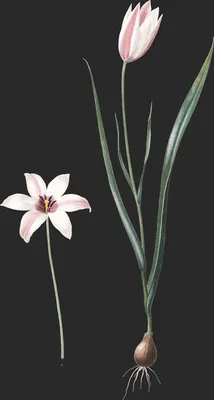
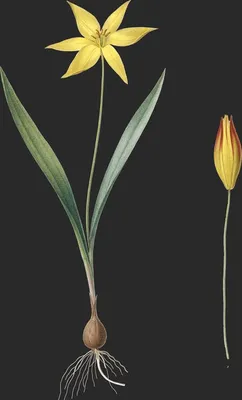
Measured on this plate: flower colour covers 11.4% of the sheet, foliage 2.3%, the cast yellow-green. No other plate shares exactly this measure. A bulb of overlapping fleshy scales gives the lily its Chinese name, 'hundred-fold'; six tepals reflex as the flower opens, around six stamens with long, T-shaped anthers. Filed under yellow — a honey-yellow, built in washes from a pale ground. Read the outline, then the colour layers, then the brush.
-
Composition
Tall and narrow, the plant rising in one movement with generous margins — the upright format of most floras. (about 1.41 : 1) No details are appended: a plate for looking, not for keying out. The plant takes about 33% of the sheet, centred near the centre — the easy measure most florists kept to. Blank paper is not unfinished work: it is where the eye rests.
-
Line and Colour
The first half of the nineteenth century moved from copper to steel to lithography; stipple could render the softest transition. There is evidence on the back too: the plate mark pressed into the paper, the slight relief of the pigment, lines worn shallow in a later printing.
-
Season
Early to high summer, June and July; the flowers last only days, so artists drew them just as they opened. The year 1812 on the plate is that of publication, not of flowering — the gathering came a year or two earlier. Note the season. Phenology is the most practical tool of appreciation.
-
Provenance
Temperate north — China, Japan, Europe. Long used in Chinese medicine, lilies were hunted in East Asia by nineteenth-century collectors and transformed European gardens. In the same volume the kin are shelved together; set several plates side by side.
-
The Book and the Hand
“The Liliaceae” was drawn by Pierre-Joseph Redouté and published 1802-1816. This plate is Plate 402, book page 401. The image is public domain; the hand-colouring is still one person's hand.
-
Poetic Resonance
故乡寒食荼醾发,百合香浓邸舍深。
—— 宋·宋祁《山橙花》
The poem gives the mood first and the picture supplies the form; set the line beside the plate and the yellow the corolla becomes its resting point.
-
The Written Tradition
生川谷。《吴普》曰:百合一名重迈,一名中庭,生冠朐及荆山。(艺文类聚引云:一名重匡)《名医》曰:一名重箱,一名摩罗,一名中逢花,一名强瞿,生荆州,二月八月,采根,暴干。
—— 神农本草经·百合第一百七十
The Bencao Gangmu describes the bulb as garlic-like, edible and medicinal; Song writers already noted that the leaves vary while the flowers stay white. The difference is not of quality but of question: Europe asks what it is, China asks whom it resembles.
-
Symbolism
In the West the white lily is Marian purity, held by the angel of the Annunciation; in China the name sounds like 'a hundred years in harmony', a wedding wish. This plate leans yellow, which in flower language adds one more degree of feeling. Meanings change their tune: the same flower can say opposite things within a century.
-
What to Take Away
Next time you stand before a flowering plant, give it three minutes: leaf arrangement, direction of the flower, the darkest patch. A flora exists to be consulted; look long enough and you forget to consult — someone in 1812 gave a whole day to a single flower.