Thaumastura Coræ
Thaumastura Coræ
Cora’s Shear-tail
- 合集
- 古尔德蜂鸟图谱
- 绘者
- John Gould(约翰·古尔德)
- 年代
- 1852
- 图版号
- Pl. 153, Vol. III
- 原书页码
- p.153
- 授权
- CC0 1.0 Universal (Public domain)
十观
- 纵幅 1.57∶1
第一眼
江馆清秋,晨起看竹,烟光日影露气,皆浮动于疏枝密叶之间。
—— 清·郑板桥《题画竹》
郑板桥说他画竹,是先看见“烟光日影露气”在枝叶间浮动,才动手。看画时找这一层空气,比记住花的名字更要紧。这一幅是竖的:眼睛从下往上走,落点在中段那只鸟身上。先别急着看羽毛,让姿态先立起来。第二步凑近一寸:看线与色的交界,色有没有压住线,线有没有断。第三步,把视线放到最深的那一小块:整幅的用色秩序,都是从那里排开的。
名与实
学名缺席时,画面本身就是唯一的证据。此幅既无通行中文名,学名也不可靠,只能以原书题名相称——图谱里总有几幅这样的图,只能靠画面本身说话。
形与色
翼小而振频极高,能悬停、能倒飞;羽色非颜料所致,是羽枝结构折射的光,随角度而变。此幅未作色相归档,只能就形制论。看形制不必求全:记住喙形、翼式与栖姿,这一类的骨架就立住了。
构图与呼吸
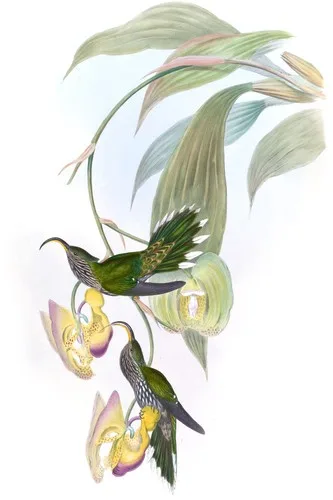
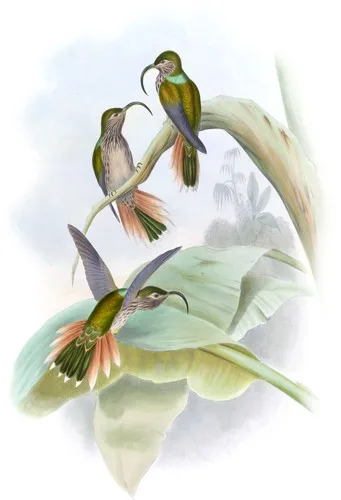
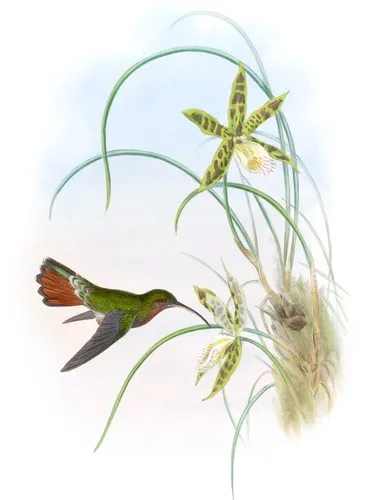
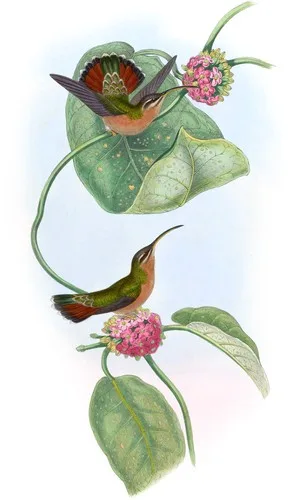
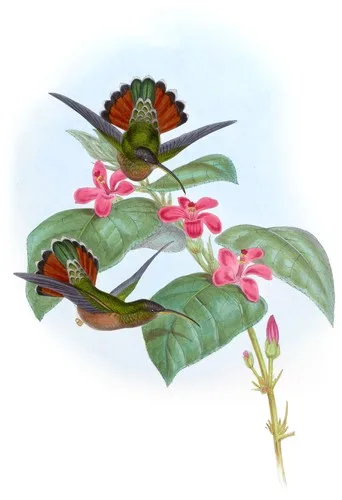
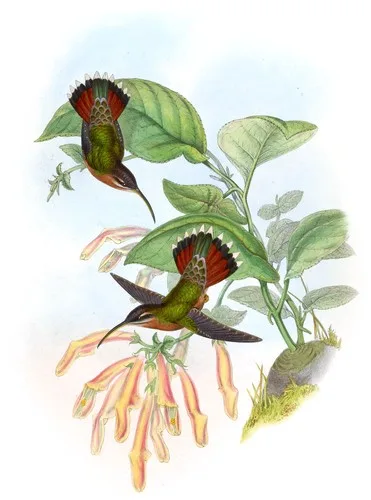
画幅高而窄,鸟栖在枝的中段,上下留白多——十九世纪鸟谱的标准版式,留给它飞走的余地。全幅只画一只,不作解剖附图——这类图更近于“观赏”,而非“鉴定”。空白不是没画完,是给眼睛留的落脚处:一张图若四边都塞满,花反而会闷。
一刀一色
十九世纪后半叶,石版与彩色石印渐成主流:颜色可以直接印出,不再依赖手工,线条反倒退居其次。图像的“准确”提高了,手性却淡了。工艺留下的破绽比题跋更诚实:刻工不会撒谎,上色的人赶时间的时候会。想动笔临它的人记住一句:先铺大块的形与色,干后再收细部;石印的柔和层次来自薄涂与网点,水彩分两三遍淡铺即可逼近。
诗境
夫列子御风而行,泠然善也,旬有五日而后反。
—— 《庄子·逍遥游》
蜂鸟悬停于空,不落不飞,最近于“御风”。庄子说的是一种自由的姿态,蜂鸟把它做成了生理事实。古人写到这一层,已不只是赏花,是借花说人;画面则只负责把那朵花留住。
花语
阿兹特克以蜂鸟为战神与太阳的化身;欧洲维多利亚时代则以蜂鸟为收藏与装饰的极致,百万只羽毛被做成胸饰。中国旧籍无此鸟,故无象征——这空白本身,就是一部博物学交流史。象征会随世道改口:同一只鸟,在一个世纪里可以说完全相反的话。
时与地
温带种类的蜂鸟则随花北迁,一年往返数千公里。仅产美洲,自阿拉斯加南部至火地岛,以安第斯山最为繁盛。中土无蜂鸟,汉籍不载,晚清海外游记始见其名。图上所记的 1852 年是刊行之年,不是采到那只鸟的年份;真正的观察记录通常比出版早一两年。同一株植物,春秋两季像两种东西;同一座山,一百年前与今天叫两个名字。图把这两样都冻结在了纸上。
书与人
《古尔德蜂鸟图谱》只署了约翰·古尔德一个人的名字。从画稿到成图要过好几双手:转刻的人求准,上色的人求快——快与准之间,就是各幅之间深浅不一的来历。
带走一双眼睛
鉴赏力不是知识,是习惯:每次多看一眼,十年之后你看什么都和别人不一样。图谱的用意是“以备查考”,看久了却会忘记查考:1852 年的一个人,为一只鸟花了整整一天。
关于本图版
《古尔德蜂鸟图谱》(Gould's Hummingbirds)由约翰·古尔德绘制,1849—1887 年间印行,本图即其中一幅。画面主体为 Thaumastura Coræ,在分类体系中列于蜂鸟科(Trochilidae)。
该合集全编共 421 幅图版,此图为其中之一,图版编号 Pl. 153, Vol. III,对应原书第 153 页,版式为纵幅。扫描件取自公有领域原件,经高分辨率修复与色彩校正,可按原大放大查看线条与设色。
原书文字(英文 / 法文)
Peru
This species has been named Cora by M. Lesson after the priestess of the Sun, so charmingly described by Marmontel in his romance of the Incas.
It is not only a very beautiful and elegant bird, but it is rendered one of the most remarkable members of the entire group to which it pertains by the singular form of its tail, which curious structure, however, is confined to the male sex alone. The females of the Cora, the Eliza, the Fanny, and the Yarrelli, although very different from their respective males, are all remarkably similar to each other, which circumstance most clearly indicates that these birds belong to one group, or that at least they are very nearly allied.
The native country of the Thaumastura Coræ is Peru, over which it enjoys a rather wide range of habitat. It is often spoken of by travellers as occurring in abundance between the port of Callao and the city of Lima. Independently of this locality, I possess specimens brought from the interior of the country by M. Warszewicz, and one which is labelled as having been procured in one of the valleys of the Andes.
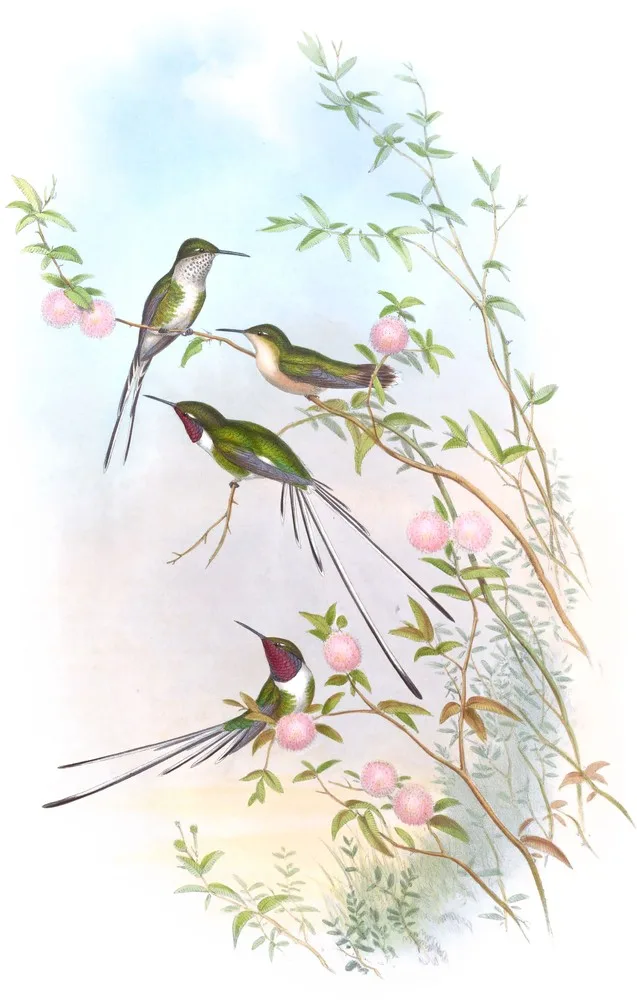
The male has the head, upper surface and wing-coverts golden-green; wings purplish-brown; throat metallic violaceous-crimson; under surface greyish-white; tail dull black, all but the outer feather on each side margined on the internal web from the base to near the tip with white.
The female has the head greyish-green; all the upper surface bronzy-green; wings purplish-brown, the outer feather on each side with a light-coloured shaft; two centre tail-feathers green, spotted with black near the end of the inner web and slightly fringed with white at the tip; lateral feathers blackish-brown with white; under surface buffy-white.
The young males differ very considerably from the adults of either sex: as might be supposed, the rich colouring of the throat is entirely wanting; on the other hand the tail is similar to that of the adult, but is neither so long nor so distinctly marked with black and white; the throat and under surface are dull grey, the former being indistinctly spotted with a darker colour.
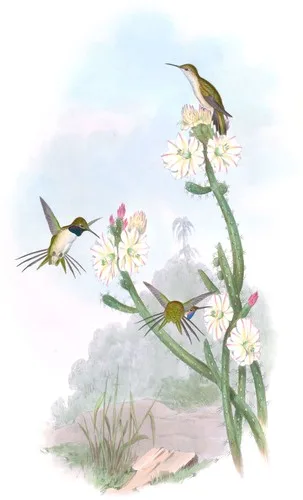
The Plate represents three males, a young male, and a female, of the size of lite. The plant is a species of Mimosa, copied from a drawing kindly lent to me by M. Bourcier.
References
- Ormsmya Cora, Less. et Garn. Voy. de la Coq. Ois., pl. 18. fig. 4.—Less. Hist. Nat. des Ois. Mou., p. 52. pl. 6.—Ib. Les Troch., p. 109, 111, pls. 39, 40.—Ib. Traité d’Orn., p. 275.—Ib. Man. d’Om., tom. ii. p. 82.—Ib. Ind. Gen. et Syn. des Ois. du Gen. Troch., p. xxxii.
- Calothorax cora, Gray and Mitch. Gen. of Birds, vol. i. p. 110, Calothorax, sp. 6.
- Trochilus Cora, Jard. Nat. Lib. Humming-Birds, vol. i. p. 129. pl. 25.—Tschudi, Faun. Peruana, p. 39.
- Thaumastura cora, Bonap. Consp. Gen. Av., p. 85, Thaumastura, sp. 1.—Reich. Aufz. der Col., p. 13.—Bonap. Rev. et Mag. de Zool. 1854, p. 297.