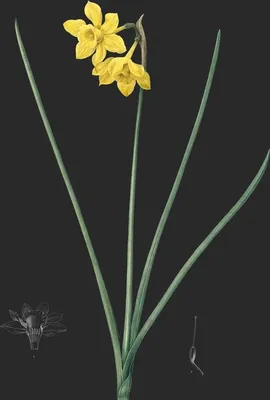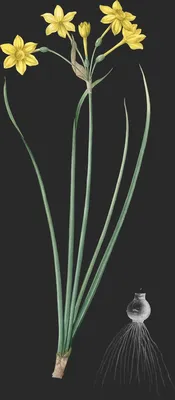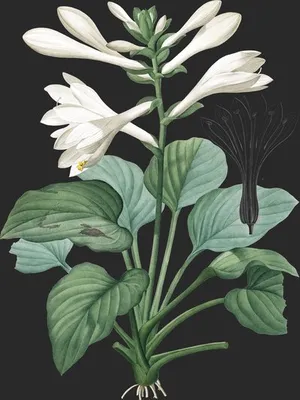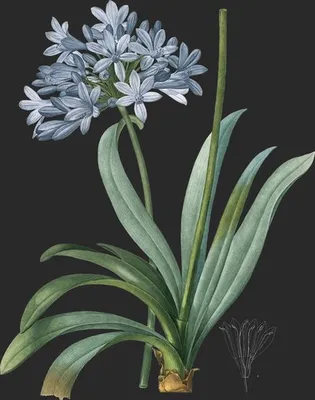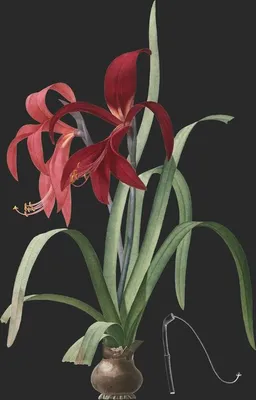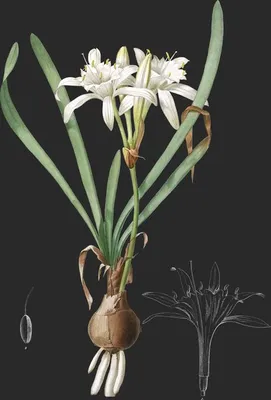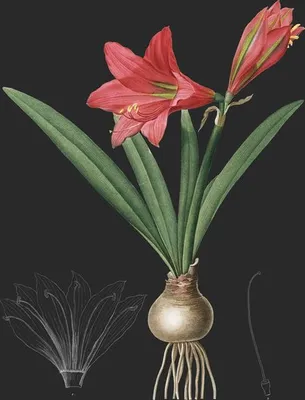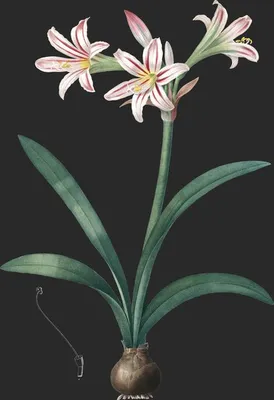
Narcissus Pseudo-Narcissus
水仙属·Narcissus Pseudo-Narcissus
Narcisse Faux-Narcisse
Ten ways of seeing
- measured cast yellow-green
- upright 1.48 : 1
First Look
竖划三寸,当千仞之高;横墨数尺,体百里之迥。
—— 南朝宋·宗炳《画山水序》
A vertical stroke of three inches stands for a cliff of a thousand fathoms; a few feet of ink holds a hundred li.
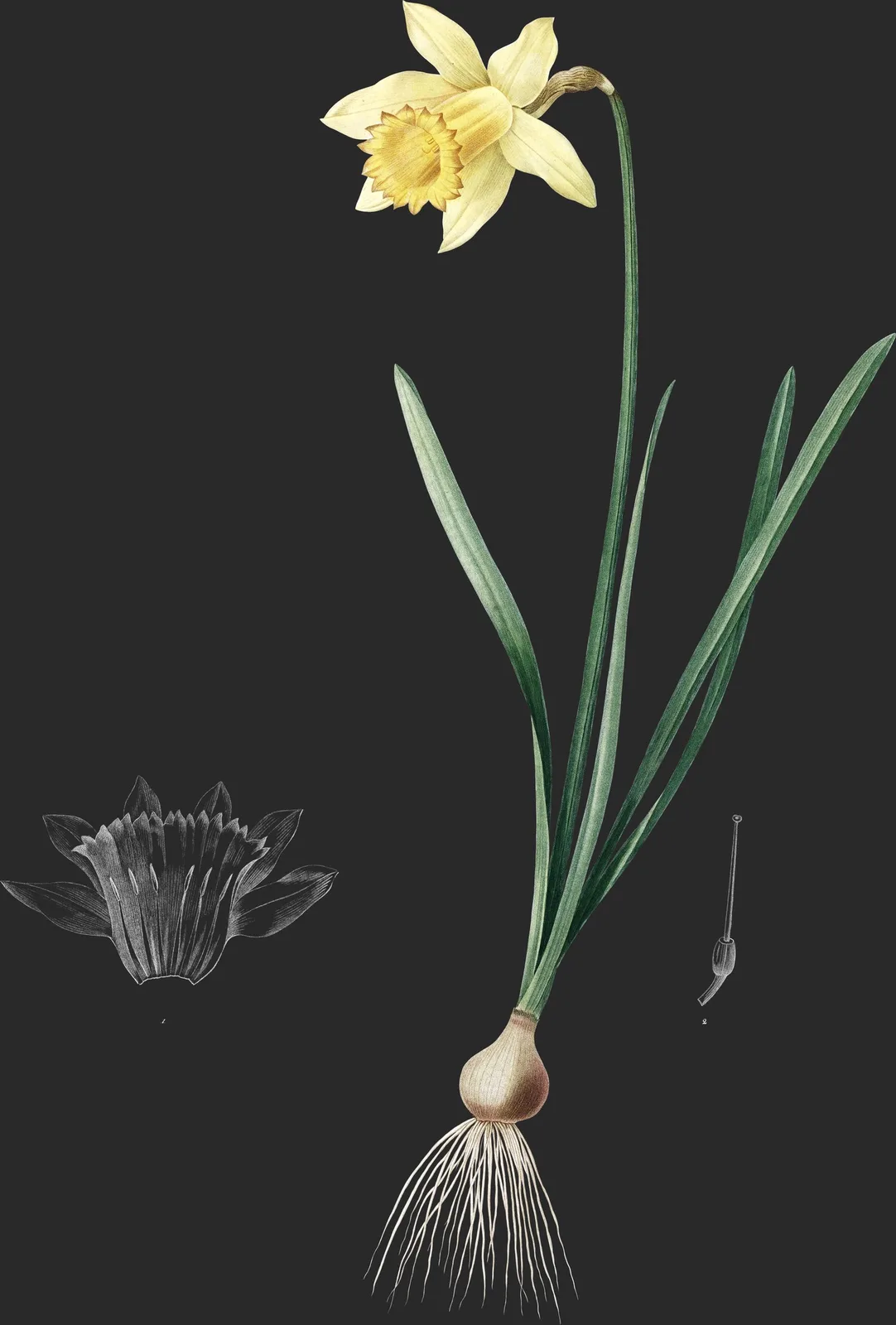
The sheet is vertical: the eye climbs and settles in the upper half. Let the plant stand before you look for detail. Then step in close: watch where colour meets line, and whether the line ever breaks. Third, find where the yellow is deepest: the whole tonal order is measured from that patch. The pose leans right: the upper half carries 12 points further right than the lower — a living thing, not a diagram.
Name and Thing
The binomial is Narcisse faux-narcisse: the first word is the genus it belongs among, the second the epithet that sets it apart. Two words carry a whole provenance. The older system filed it under Amaryllidaceæ by overall affinity; Linnaeus, counting stamens only, placed it in Hexandria — two ways of asking what a plant is. No established Chinese name exists, so it is cited by its binomial alone.
Form and Colour
Measured on this plate: flower colour covers 2.8% of the sheet, foliage 1.6%, the cast yellow-green. No other plate shares exactly this measure. Bulbous plants store the year underground — bulb, corm or tuber — then send up a few thick leaves and a single scape, with six tepals in cup, funnel or star. Filed under yellow — a honey-yellow, built in washes from a pale ground. Three things fix the habit: leaf arrangement, tepal count, and how the flower is borne.
Composition
The sheet is tall. No details are appended: a plate for looking, not for keying out. The plant covers only 10% of the sheet, centred above centre; the emptiness is where the eye rests.
Line and Colour
The first half of the nineteenth century moved from copper to steel to lithography; stipple could render the softest transition. Take a loupe to three places: petal edge, leaf vein, caption. An unbroken line means engraving; colour crossing the outline means a hand. If you mean to copy it: take its skeleton, its margins and the order of its colours; the burin's hatching is the language of copper — suggest it with pencil density, do not imitate it stroke for stroke.
Poetic Resonance
郁金裳浥蔷薇露,知是仙人萼绿华。
—— 宋·方岳《巖桂花》
The poem gives the mood first and the picture supplies the form; set the line beside the plate and the yellow the corolla becomes its resting point.
Symbolism
The tulip was an imperial emblem in Istanbul and a speculative bubble in Amsterdam; the hyacinth sprang from a boy's blood in Greek myth. What bulbs share is concealment: next year kept underground. This plate leans yellow, which in flower language adds one more degree of feeling. Flower language was added later; the flower knows nothing of it, and that innocence is part of its power.
Season and Place
Early spring to early summer, genus by genus: tulips and hyacinths first, gladiolus and amaryllis later. South African bulbs filled European glasshouses after 1800. The year 1805 on the plate is that of publication, not of flowering — the gathering came a year or two earlier. The bud and the ripe fruit on one branch tell the season; the name in the title often tells the journey.
The Book and the Hand
“The Liliaceae” carries only Pierre-Joseph Redouté's name. A plate is collective work: drawer, engraver and colourist were different hands, and the unnamed ones decided how good it looks.
What to Take Away
Carry three rules away: whole before detail; line before colour; picture before book. The flower of that year is dust, yet its image on paper has outlived every living cousin.
About this plate
Observations
Le faux-Narcisse se distingue facilement de toutes les espèces du même genre, ses feuilles planes, à sa hampe chargée d’une seule fleur, et surtouts ce que son godet ou tube intérieur du périgone est égal à la longuenr des lobes du périgone, ondulé et irrégulièrement lobé sur les bords; mais il n’est pas aussi facile de débrouiller les nombreuses variétés que cette espèce présente, et de décider quelles sont celles qu’on doit regarder comme des espèces ou comme des variétés.
Notre variété A, qui est la plus commune, et qu’on trouve sauvage dans les bois de presque toute l’Europe, se distingue à sa fleur de médioere grandeur, entièrement jaune, a son godet un peu plus foncé que les lanières du périgone, et dont l’extrémité est peu étalée.
La variété B a le godet jaune, un peu plus ouvert à son extrémité, et se fait principalement remarquer en ce que les lanières de son périgone sont de couleur blanchätre; elle est plas rare que la précédente, et se trouse principa lement dans le midi de l’Europe.
Enfin la variété C est distinete par la grandeur énorme de son godet, parce que le limbe de ce godet est très-ouvert, et que les lanières du périgone sont jaunes comme le godet. Elle est indigène d’Espagne.
Chacune de ces races présente deux variétés, ou plutôt deus monstruosités produites par la culture, savoir:
- une variété dont les lanières du périgone avortent;1
- une variété plus recherchée des amateurs, dans laquelle plusieurs tubes pétaloïdes, dus à l’épanouissement des filets des étamines, naissent a l’intérieur du godet.2
Les botanistes sont loin d’être d’accord sur l’importance qu’on doit attribuer aux caractères qui distinguent les trois races du faux-Narcisse; ces dilférences se conservent depuis longtemps dans les individus cultivés; mais comme on les multiplie par les cayeux, et non par les graines, on ne peut rien conelure de la permanence de ces races, soumises à finluence de Thomme. Dans cette incertitude, et jusqu à ce que des observations plus précises faites sur des plantes sauvages aient éclairci la question, je me suis rangé à l’avis de Miller et de Lamarck, qui ne considéraient ces races que comme des variétés du fous-Narcisse. En effet, quant à la diversité des couleurs, on sait qu’en général elle est de pen de poids pour la distinction des espèces, et le Narcisse tazette nous offre comme le faux Narcisse deux variétés reconnues pour telles partous les bota-nistes, dont l’une a les lanières du périgone jaunes, et l’autre blanches, avec le sodet jaune. Quant à la forme et à la grandeur, il ne serait pas contraire à la physiologie que, dans certains individos coltivés, le godet prit un développement plus considérable, et qu’en acquérant plas d’ampleur, son bord parút plas étalé: les monstruosités à plusieurs godets et à périgone sans limbe nons conduisent jusques à un certain point, à attribuer cette influence à la culture.
Fam. des Narcisses. Juss.—Hexandrie monogynie. Lin.
- Narcissus pseudo-Narcissus. N. spathâ uniflorâ, coronâ campanulatâ erectâ undalatâ lacinias ovatas æquante. Syn. Fl. gall. p. 165. Fl. fr. n. 1980.
- Narcissus pseudo-Narcissus. N. spathâ uniflora, nectario campanulato erecto crispo æquante petala ovata. Mill. Dict. n. 1. Lam. Dict. 4. p. 422.
- Narcissus sylvestris. Lam. Fl. fr. ed. 1. vol. 3. p. 390.
A. totus luteus, coronâ medioeri erectâ.
- Narcisaus pseudo-Narcissus. N. spathâ uniflorâ, nectario campanulato erecto crispo æquante petala ovata. Lin. Spec. 414. Scop. carn. ed. 2. n. 395. Roth. germ. 1. 145. 11. 379. Hoffm. germ. 115. Leers. herb. n. 343. engl. bot. t. 17. Smith. Fl. brit. 355. Vill. Dauph. 2. p. 248. Gou. Fl. monsp. 304. Crantz. inst. 484. Sut. Fl. helv. 1. p. 189. Dur. bourg. p. 342. Willd. Spec. 2. p. 35. Pers. ench. 350.
- Narcissus pseudo-Narcissas. N. neetario apice crispo crenulato. Haw. trans. Lin. soc. 5. p. 243.
- Narcissus festalis. Salisb. prod. 220.
- Narcissus paeudo-Narcissas. N. spathâ uniflorâ, perapetalo campanulato corollam æquante. Mænch. meth. 508.
- Narcissus foliis ensiformibus, scapo unilloro, scypho undulato serrato petalis æquali. Hall. helv. n. 1952.
- Narcissus foliis ensiformibus, florum nectario longitudine peralorum. Lin. hort. Cliff. 134. hort. Ups. 74. Sauv. monsp. 17.
- Narcissus sylvestris pallidus, calce luteo. C. Bauh. pin. 52. Ray. syn. 351. Tourn inst. 356.
- Narcissas luteus sylvestris. Dod. pempt. 227. f. 12.
- Narcissus luteus. Trag. 757.
- Balbocodiam vulgatius. J. Bauh. hist. 2. p. 593.
- Pseudo-Narcissus anglicus. Ger. em. 133. ex. sm.
B. Corona lateâ, laciniis perigonii albescentibus.
- Narcissus bicolor. N. spathâ uniflorâ, nectario campanulato, margine patulo crispo æquante petala. Lin. Spec. 415. Gon. illustr. 22. Willd. Spec. 2. p. 36. Pers. ench. 350. Crantz. inst. 484.
- Narcissas pseudo-Narcissus. Bull. herb. t. 389.
- Narcissas albus, calice flavo alter. C. Bauh. pin. 52. Rudb. elys. 2. p. 70. f. 7.
C. Totas Inteus, coronâ amplissimâ apice patente.
- Narcissas hispanicus. N. scapo ancipiti exstriato unifloro, nectario petalis æquali sexfido patulo, lobulis dentatis. Gou. illust. 23. Lam. Dict. 4. p. 428.
- Narcissus major. N. foliis subtortuosis, spathâ uniflorâ, nectario campanulato patulo crispo æquante petala. Curt. bot. mag. t. 51.
- Narcissus major. N. nectario amplissimo apice patentissimo inciso undalato. Haw. trans. Lin. soc. 5. p. 243.
- Narcissus bicolor. var. β. Willd. Spee. 2. p. 36.
- Narcissus major totus luteus, calice prælongo. C. Bauh. pin. 52. Rudb. elys. 2. p. 71. f. 9.
- Narcissus major totus lateus, calice prælongo alter. Lob. ic. 117.
- Narcissus sylvestris alia icon. Dod. pempt. 22.
- Pseudo-Narcissus major hispanicas. Clus. hist. 165. Swartz. floril. p. 21. f. 2.
- Bulbocodiam hispanicum. J. Bauh. hist. 2. p. 594.
- Narcissus sylvestris multiplex calice carens. C. Bauh. pin. 54.
- Narcissus luteus sylvestris duplici seu triplici tubo aureo. C. Bauh. pin. 54.