Ornithogalum Spathaceum
春慵花属·Ornithogalum Spathaceum
Ornithogale a Spathe
About this plate
Description
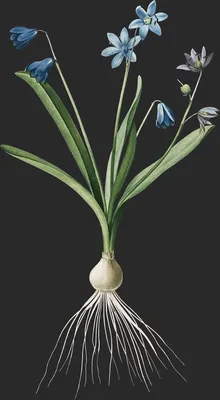
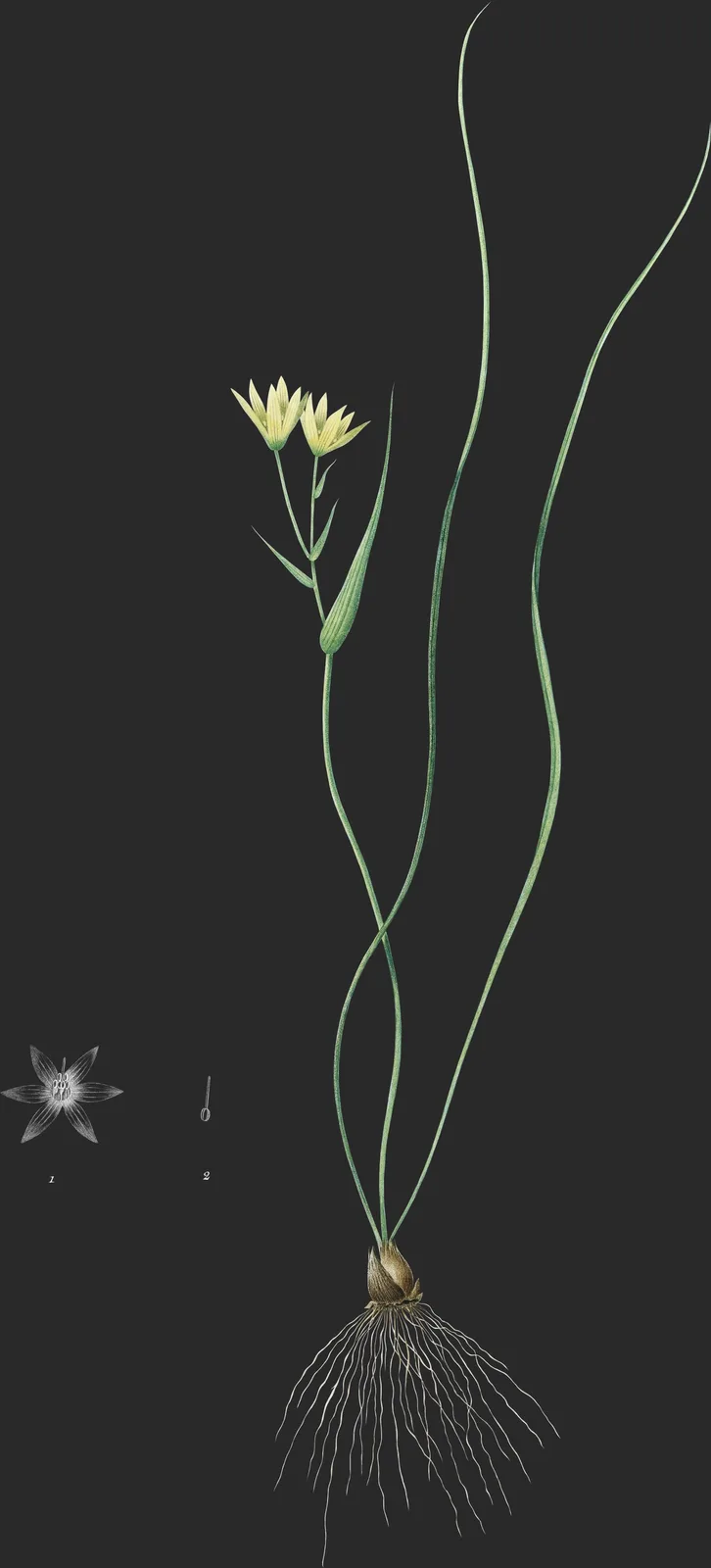
Les Ornithogales à fleurs jaunes disposées en ombelle forment un groupe si naturel, les espèces qui le constituent se ressemblent tellement pour le port, qu’on a dû naturellement les confondre entre elles avant qu’un examen attentif ait pu faire apercevoir les dillèrences qui les séparent; aussi plasieurs d’entre elles, quoique indigènes de l’Europe, ne sont-elles connues que depuis un petit nombre d’années. C’est en particulier le cas de celle que nous allons décrire. Long-temps confondue avec les Ornithogales nain et jaune, elle en a été distinguée par Hayne et les anteurs qui l’ont suivi: elle en diffère en effet par sa hampe plus grele et plas élancée, par ses feuilles radicales filiformes, par ses fleurs plus petites, et surtout par la feuille solitaire en forme de spathe qui nait de sa tige, au-dessous de l’origine des pédoncules. Elle diffère en outre du premier par ses pédoncules glabres.
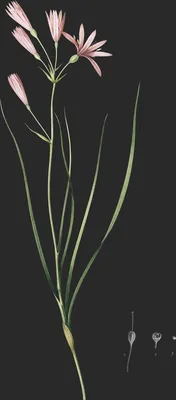
La balbe qui lui donne naissance est ovale, grosse comme un pois, couverte d’une tunique membraneuse, brune. Il en nait inférieurement des fibrilles radicales tres-déliées et pen nombreuses. De son sommet sortent deux feuilles filiformes, glabres, longues de deux à trois centimètres, et à peine larges d’un millimètre et demi. La hampe qui sort de la bulbe entre les feuilles est un peu plas courte qu’elles. Très-grêle dans le bas, elle augmente graduellement de diamétre jusqu’auprès de son sommet, un peu au-dessous daquel elle porte une feuille lancéolée-linéaire courbée en forme de spathe, redressée et s’élevant jusqu’au niveau des fleurs. Celles-ci, dont le nombre varie de deux à quatre, sont soutenues par des pédoncules simples, gréles et parfaitement glabres, qui naissent du sommet de la tige, et qui sont entourés à leur origine d’une collerette composée de folioles lancéolées, fort petites. Le nombre de ces folioles est, en général, supérieur d’une unité à celui des pédoncules, qui portent quelquefois eux-mêmes une petite bractée vers le milieu de leur longueur.
Le périgone est divisé jasqu’à sa base en six segments lancéolés, obtus, étalés, verdatres en dehors, jaunes en dedans, marqués de nervures longitu-dinales, brunes, et longues de dix à douze millimètres. Ses étamines, dont trois sont plus courtes que les autres, n’atteignent pas la moitié de la longueur du périgone. Leurs filaments sont tres-courts, en forme d’alène, un peu dilatés à la base. Les anthères sont jaunes, oblongues, redressées. Lovaire est un peu ovalaire, surmonté par un style filiforme deux fois aussi long que les étamines. Le stigmate est simple. Nous n’avons pas vu le fruit.
Histoire
L’Ornithogale à spathe croit naturellement dans quelques parties du nord de l’Allemagne, et notamment auprès de Hambourg. C’est d’après un échantillon recueilli auprès de cette ville que nous le décrivons.
Explication de la planche
La Plante entière de grandeur naturelle.
- Une fleur isolée et ouverte.
- L’ovaire et le style.
Fam. des Asphodèles. Juss.—Hexandrie monogynie. Lin.
- Ornithogalom spathaceum. O, scapo tereti, spatha univalvi, umbellâ pedunculatâ subtriflorâ. Hayne, in Usteri n. bot. annal. stuck. 21. p. 11. t. 1. f. 1. Willd. sp. pl. 2. p. 112. Pers. enchir. 1. p. 363.
- Ornithogalam Hayaii. O. foliis filiformibns strictis, scapo subtereti monophyllo, ambellâ peduncolatâ subtrillorâ. Roth. in Roemer. arch. Bot. 3. p. 42. ex Willd.
- Ornithogalam minimom. Fl. dan. t. 612.
Twelve ways of seeing
- measured cast yellow-green
- upright 2.21 : 1
- published 1809
- Plate 242
Not a catalogue entry but a way of looking: how to stand, what to notice, how the line was cut, when it flowers, where it came from, who made it — and then the poems and the classics that taught China to see the same flower. Read the twelve in order and the plate opens.
-
First Look
凡画山水,意在笔先。
—— 唐·王维《山水论》
In painting, the intention precedes the brush.
The sheet is vertical: the eye climbs and settles in the upper half. Let the plant stand before you look for detail. Then step in close: watch where colour meets line, and whether the line ever breaks. Third, find where the yellow is deepest: the whole tonal order is measured from that patch. The pose leans right: the upper half carries 8 points further right than the lower — a living thing, not a diagram.
-
Name and Thing
The binomial is Ornithogalum spathaceum: the first word is the genus it belongs among, the second the epithet that sets it apart. Two words carry a whole provenance. The older system filed it under Asparagaceæ by overall affinity; Linnaeus, counting stamens only, placed it in Hexandria — two ways of asking what a plant is. No established Chinese name exists, so it is cited by its binomial alone.
-
Form and Colour
Measured on this plate: flower colour is sparing, 0.4% of the sheet against 1.0% of foliage, the cast tending yellow-green — as with pale or white blooms, outline and tone do the talking. Bulbous plants store the year underground — bulb, corm or tuber — then send up a few thick leaves and a single scape, with six tepals in cup, funnel or star. Filed under yellow — a honey-yellow, built in washes from a pale ground. Read the outline, then the colour layers, then the brush.
-
Composition
Tall and narrow, the plant rising in one movement with generous margins — the upright format of most floras. (about 2.21 : 1) No details are appended: a plate for looking, not for keying out. The plant covers only 4% of the sheet, centred near the centre; the emptiness is where the eye rests. Blank paper is not unfinished work: it is where the eye rests.
-
Line and Colour
The first half of the nineteenth century moved from copper to steel to lithography; stipple could render the softest transition. Take a loupe to three places: petal edge, leaf vein, caption. An unbroken line means engraving; colour crossing the outline means a hand.
-
Season
Early spring to early summer, genus by genus: tulips and hyacinths first, gladiolus and amaryllis later. The year 1809 on the plate is that of publication, not of flowering — the gathering came a year or two earlier. Note the season. Phenology is the most practical tool of appreciation.
-
Provenance
Three homelands: the Mediterranean, Central Asia and South Africa. The tulip came from Ottoman gardens and became a Dutch mania; South African bulbs filled European glasshouses after 1800. The volume was made in 1802-1816, when most of this knowledge came from living plants under glass.
-
The Book and the Hand
“The Liliaceae” was drawn by Pierre-Joseph Redouté and published 1802-1816. This plate is Plate 242, book page 242. The image is public domain; the hand-colouring is still one person's hand.
-
Poetic Resonance
郁金香汗裛歌巾,山石榴花染舞裙。
—— 唐·白居易《盧侍御小妓乞詩座上留贈》
The poem gives the mood first and the picture supplies the form; set the line beside the plate and the yellow the corolla becomes its resting point.
-
The Written Tradition
论画以形似,见与儿童邻。
—— 宋·苏轼《书鄢陵王主簿所画折枝》
To judge a painting by likeness alone is the view of a child.
Li Bai's 'orchid wine, fragrant with yujin' is often misread as tulips; the Tang yujin was a turmeric-like root used to scent wine — same name, different plant. You need not parse every word: take the line, and the flower acquires a second face.
-
Symbolism
The tulip was an imperial emblem in Istanbul and a speculative bubble in Amsterdam; the hyacinth sprang from a boy's blood in Greek myth. What bulbs share is concealment: next year kept underground. This plate leans yellow, which in flower language adds one more degree of feeling. Meanings change their tune: the same flower can say opposite things within a century.
-
What to Take Away
Appreciation is not knowledge but habit — one more look each time. The flower of that year is dust, yet its image on paper has outlived every living cousin.