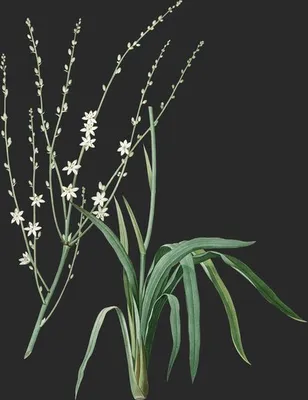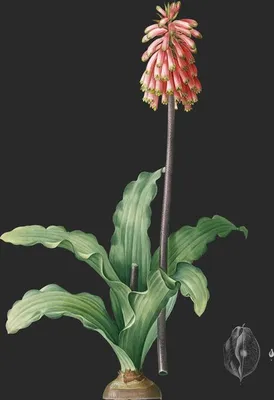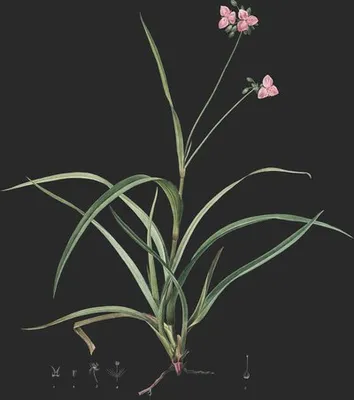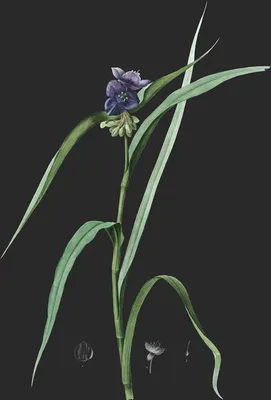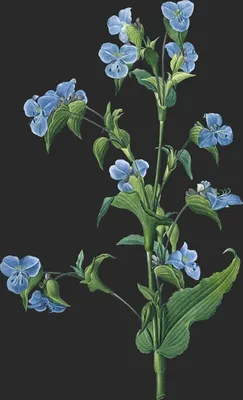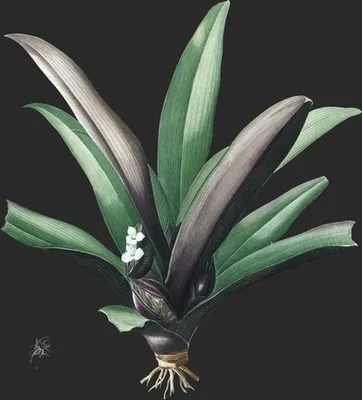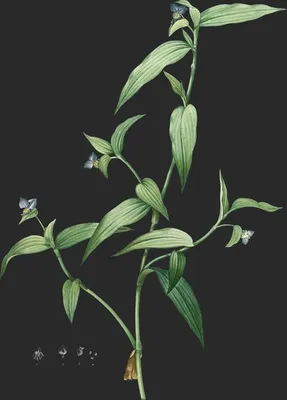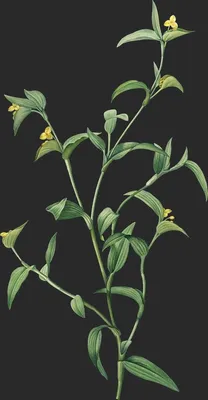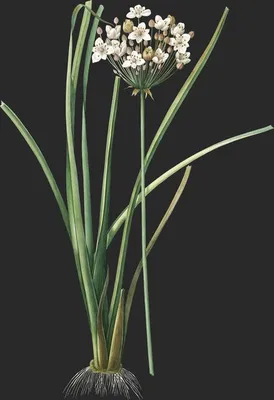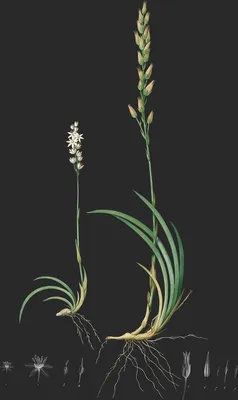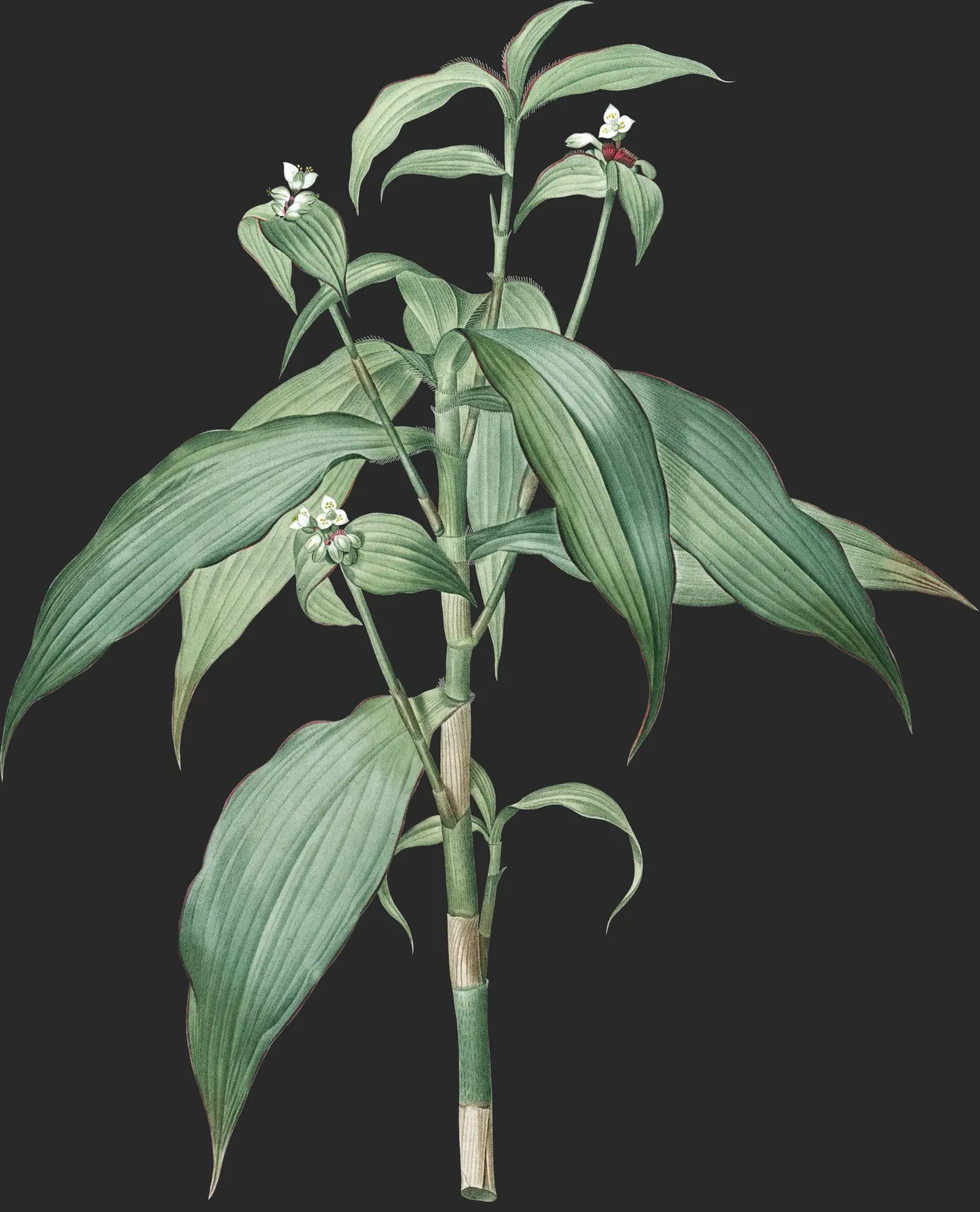
Commelina Zanonia
Comméline de Zanoni
Comméline de Zanoni
Ten ways of seeing
- measured cast yellow-green
- slightly upright 1.24 : 1
First Look
夫象物必在于形似,形似须全其骨气。
—— 唐·张彦远《历代名画记》
Likeness is the threshold; bone-and-breath is the point.
Slightly taller than wide; the eye lands above centre. Then step in close: watch where colour meets line, and whether the line ever breaks. Third, find where the green is deepest: the whole tonal order is measured from that patch. The pose leans right: the upper half carries 13 points further right than the lower — a living thing, not a diagram.
Name and Thing
The binomial is Commelina zanonia: the first word is the genus it belongs among, the second the epithet that sets it apart. Two words carry a whole provenance. The older system filed it under Juncaceæ by overall affinity; Linnaeus, counting stamens only, placed it in Hexandria — two ways of asking what a plant is. No established Chinese name exists, so it is cited by its binomial alone.
Form and Colour
Measured on this plate: flower colour is sparing, 0.5% of the sheet against 8.2% of foliage, the cast tending yellow-green — as with pale or white blooms, outline and tone do the talking. A bulb of overlapping fleshy scales gives the lily its Chinese name, 'hundred-fold'; six tepals reflex as the flower opens, around six stamens with long, T-shaped anthers. a moss green. Read the outline, then the colour layers, then the brush.
Composition
The sheet is slightly tall. No details are appended: a plate for looking, not for keying out. The plant covers only 25% of the sheet, centred a little left of centre; the emptiness is where the eye rests.
Line and Colour
The first half of the nineteenth century moved from copper to steel to lithography; stipple could render the softest transition. There is evidence on the back too: the plate mark pressed into the paper, the slight relief of the pigment, lines worn shallow in a later printing. If you mean to copy it: take its skeleton, its margins and the order of its colours; the burin's hatching is the language of copper — suggest it with pencil density, do not imitate it stroke for stroke.
Poetic Resonance
梨花淡白柳深青,柳絮飞时花满城。
—— 宋·苏轼《东栏梨花》
Pear blossoms pale white, willows deep green; when the catkins fly, flowers fill the town.
The poem gives the mood first and the picture supplies the form; set the line beside the plate and the green the corolla becomes its resting point.
Symbolism
In the West the white lily is Marian purity, held by the angel of the Annunciation; in China the name sounds like 'a hundred years in harmony', a wedding wish. Meanings change their tune: the same flower can say opposite things within a century.
Season and Place
Early to high summer, June and July. Temperate north — China, Japan, Europe. Long used in Chinese medicine, lilies were hunted in East Asia by nineteenth-century collectors and transformed European gardens. The year 1807 on the plate is that of publication, not of flowering — the gathering came a year or two earlier. The bud and the ripe fruit on one branch tell the season; the name in the title often tells the journey.
The Book and the Hand
“The Liliaceae” carries only Pierre-Joseph Redouté's name. A plate is collective work: drawer, engraver and colourist were different hands, and the unnamed ones decided how good it looks.
What to Take Away
Next time you stand before a flowering plant, give it three minutes: leaf arrangement, direction of the flower, the darkest patch. A flora exists to be consulted; look long enough and you forget to consult — someone in 1807 gave a whole day to a single flower.
About this plate
La tige de cette plante s’élève verticalement à la hauteur de deux pieds en-viron. Elle est simple, glabre, genouillée, feuillée dans en partie supérieure, nue inférieurement, en partie couverte par les gaines des feuilles: celles-ci sont sessiles, engainantes, lancéolées, larges, rétrécies en pointe à leur extré-mité. Elles sont longues de près de trois décimètres, entières sur les bords, marquées de nervures longitudinales, glabres en dessus, garnies en dessous d’un léger duvet. Leurs gaines sont persistantes, lâches, membraneuses, pu-bescentes, marquées de nervures saillantes et ciliées sur les bords. Elles se fendent en vieillissant.
Le long de la tige, et de distance en distance, naissent des pédoncules soli-taires, opposés aux feuilles, dont ils atteignent la longueur, cylindriques, et présentant, dans leur partie moyenne, une sorte d’articulation, qu’enveloppe une foliole pointue roulée en forme de gaine. Leur base est renfermée dans une gaine particulière, membraneuse et tronquée à son extrémité. Leur sommet est terminé par un groupe de sept à huit fleurs blanches et petites, au-dessous desquelles est une collerette formée de deux folioles ovales, rétrécies en pointe à leur extrémité et recourbées en dessous. Les pédicelles qui supportent les fleurs sont très-courts, inégaux, un peu renflés à leur extrémité et séparés par des écailles scarieuses; ils sont redressés pendant la floraison, mais se renversent lorsqu’elle est finie.
Les divisions du périgone sont disposées sur deux rangs bien distinets; les trois extérieures sont en forme de calice, ovales, aigués, concaves et persis-tantes; les trois intérieures, que l’on peut considérer comme la véritable co-rolle, sont blanches ou bleuâtres, un peu plus longues que les folioles du ca-lice, ovales, aigués et ondulées sur les bords.
Les étamines sont au nombre de sis, égales en longueur à la corolle; les filaments sont droits et glabres (velus dans le milieu, suivant Swartz); les anthères sont doubles et uniformes.
L’ovaire est oblong, triangulaire et supère; le style qui le surmonte est égal en longueur aux étamines, et terminé par un stigmate en forme de tête et fendu en trois.
Le fruit est une baie oblongue, à trois côtés, à trois loges, placée obliquement sur le pédicelle, et acquérant, par la maturité, une couleur pourpre noirâtre.
Histoire
La Comméline de Zanoni habite dans les forêts de la Guyane et de la partie méridionale de la Jamaïque. On la cultive dans les serres chaudes, où elle fleurit en hiver.
Observations
Cette plante, que Linné avait réunie aux Commélines, et que Swartz a ensuite reportée au genre éphémérine, se distingue de l’un et l’autre genre, par ses fruits en baie, et mérite d’en former un particulier. Plumier avait fait ce genre sous le nom de Zanonia, et dernièrement il a été rétabli par Cramer: mais, si on l’adopte, il faudra renoncer au nom de Zanonia, que Linné a appliqué à des plantes fort dillérentes.
Fam. des Joncs. Juss.—Hexandrie monogynie. Lin.
- Commelina zanonia. C. erecta foliis lato-lanceolatis, pedunculis lateralibus solitaris medio geniculatis multifloris, bracteis geminis.
- Tradescantia zanonia. Swartz, prod. 57. Fl. ind. occid. 1. p. 604. Willd. 2. p. 17. Pers. enchir. 1. 347.
- Zanonia bibracteata. Cram. Eumer. p. 75. (ex Pers.)
- Commelina zanonia. C. corollis æqualibus, pedunculis incrassatis, foliis lancolatis, vaginis laxis margine hirsutis, bracteis geminis. Lin. spec. pl. 61. Lam. Dict. 2. p. 68.
- Commelina erecta major simples, floribus conglomeratis pedunculo longiori insidentibus. Brown. Jam. 125. № 1.
- Zanonia graminea perfoliata. Plum. gen. 38.
- Periclimenum rectum herbaceum Gentianæ folio, folii pediculo caulem ambiente. Sloan. Jam. 115. hist. 1. p. 243. t. 147. f. 1.